Showing posts with label CIR. Show all posts

Tuesday, February 7, 2012

8th Cross Cultural Forum

 
The cross-cultural forum has for the past 8 years been an event where foreign residents and Japanese alike have a chance to give speeches on some very difficult topics. This year’s Cross Cultural Forum, held on January 29th, was no easier, with all the presenters, myself included, presenting on the theme, “What is Happiness?” Not an easy question to answer, even in English.
 「クロスカルチュラルフォーラム」では、外国人も日本人も考えさせるテーマのについて発表できるイベントです。今年1月29日の開催されたクロスカルチュラルフォーラムでも、私を含める発表者は「幸せって何?」という深いテーマでした。私にとって、この質問は英語でもよく答えられないと思いました。

 After the standard introductions, our first presenter was a Jamtso Tenjin from Bhutan, a country well known for its policy of Gross-National-Happiness(GNH). In addition to giving us a rundown on GNH and its basic tenets, he also went into detail about life in Bhutan, and how people live much the same as hundreds of years ago. But what really took me by surprise was his devotion and admiration of the king of Bhutan. In the news you hear about the king’s popularity, and he does come across as a good man, but to hear it directly from a Bhutanese citizen made it very clear how much he actually means to his people.

 最初の発表者はブータンからのテンジン・ジャマソーさんでした。ブータンの「国民総幸福」という国づくり施策はとても有名で、テンジンさんはその施策を紹介したうえで、ブータンでの生活についても話しました。テンジンさんによると、ブータンの人たちは百年前の人と同じふうに生活をしているといいました。ただし、一番びっくりしたのは、ブータン王様に対しての献身でした。ニュースなどによる、ブータンの王様がとても人気な国王で、本当にいい人だと言われますが、直接ブータン人1人から聞くと、どれぐらい住民の人に愛されているかをはっきりわかってきました。


 Next, Roi Yang-yang from China gave a presentation on what constitutes happiness to younger Chinese. Though she started off on the education system, and how until college more than happiness, the lives of Chinese students are devoted to study and work; she eventually moved into talking about love and marriage. She explained how, for many educated, independent women in China, marriage is becoming less of a priority. Apparently, for these career-oriented women, happiness has become less about having a family and more about having a successful career. Clearly as the world changes, so too do people’s definitions of happiness.

次、中国からのロイ・ヤンヤンさんは中国の若者にとっての幸せについて発表しました。始めに、中国での教育システムについて話して、大学に入学するまで、学生の目標は幸福より勉強だと説明しましたけど、そのあと愛と結婚の話に移りました。ヤンヤンさんによると、教育があって自立した女の人は結婚にたいしての興味が最近減っています。こういうキャリア志向の女の人にとって、家族より出世のほうが幸福感を受けるようです。やっぱり世界が近代化すると、「幸福」の定義も変わるでしょう。

 Following these was the Seika Nishi Middle School International Exchange Club, talking about what happiness is to middle school students. By polling their classmates, the club was able to get a lot of feedback on what these kids are looking forward to most in life. Of course there were the standard hopes and dreams; a nice family and enough money, but there was also some surprising elements too. I was a little taken back that the most popular activity for middle school students was “sleeping.” Now don’t get me wrong, sleep is wonderful! But for that to be your favorite part of the day seemed a little depressing, especially for all these young kids.

 つぎ、精華西中学校の国際交流部の生徒三人は中学生にとって幸せって何ということについて発表しました。クラスメートとインタビューしてから、中学生は何を望んでいるか、また何が楽しいと思っているかについて話しました。もちろん、平和な家族やたくさんお金などの普通な夢もありましたが、びっくりすることも何個もありました。とくに私を驚かせたのは、中学生に一番幸せになる活動は「寝ること」でした。誤解しないでください:寝るのとても素敵なことですが、中学生の一日の一番幸せになることは寝ることなんて、少しかわいそうだと思います。

 Bringing up the rear was yours truly, and I had decided to talk about how for many people, immigration is the key to some kind of happiness. In particular I introduced how folks like myself don’t fit into the traditional immigrant role; those looking for work, freedom, or reunification with their families. Instead, I felt that there were special reasons for us coming here to Japan specifically. Namely; the thirst for adventure and new experiences, a love of Japanese culture or history, feeling more comfortable in Japanese society, and the attention that we foreigners receive in Japan.

 最後の発表者は私でしたけど、多くの人にとって、移住により幸せを見つけることができることについて発表しました。私のような人は、仕事や自由、家族再統合を探している移住者ではないと述べました。なぜ日本こそすみたいと思ったかというと、特別な理由があるからです。具体的に、新しい経験と冒険の欲することや、日本の文化と歴史などに興味があること、日本の社会で帰属意識を得ること、外国人として注目をもらうことです。

 The first three are fairly self-explanatory, but I’d like to explain the idea behind the last point; that many of us foreigners like the attention we get in Japan. And whereas in some countries this attention can turn to hate, in Japan most of the attention is fairly positive. Japanese people see you and want to talk to you; myself and many friends often get people coming up to us to strike up conversations while walking around town. Of course it can get annoying when you just want to be treated like everyone else, but I do think that many foreign residents do, to a certain level, enjoy being “special,” and being representatives of their country.

 最初の三つは一目瞭然ですが、最後のことを少し詳しく説明したいです。日本にいる外国人はたくさんの注目を受けます。ほかの国で、こういう注目がすぐ憎しみになれるけど、日本での注目はほとんど積極的です。外国人をみると話かけてみたい日本人も何人いるようです。私と友だちも町へ散歩しにいくときによく話しかけてもらいます。他の皆さんと同じふう扱われたいときには少し面倒ですが、私を含めて、多くの外国人は少し特別な存在になること、また国の代表になることが好きだと思います。

 The whole event was a really interesting insight into what happiness is for so many people, from Bhutan to China, to Japanese middle school kids and even myself. Hopefully next year’s topic will be just as thought provoking.

 このイベントで、ブータン人や中国人、日本の中学生、そしてアメリカ人などの幸せにたいしての意見をよく知る機械でした。来年の考えさせるテーマもう楽しみしています。

Tuesday, July 26, 2011

Gion Matsuri / 祇園祭


 Though I enjoy it when people, especially family, come to visit, I occasionally have trouble when showing them around Kyoto and Seika. By this point I have seen pretty much every famous temple, shrine and sushi bar this side of Osaka. So while my guests are all in awe of the beautiful Japanese architecture and culture, I’m wondering where the nearest all you can eat place is. However, this past week, my mother was kind enough to come when one of Japan’s biggest festivals, Gion Matsuri, was being held. As I’ve never been, this seemed like a good chance for both of us to see something entirely new.

 
 京都府で住みはじめたときから、友だちや家族がよく遊びにきます。京都府の寺や神社などの日本文化の遺産は世界中に知られているので、日本人の友だちや家族が私と会うためだけでなく、京都の有名な所にも案内してもらおうと来ます。ただし、最近案内することはちょっと大変になりました。それは、もう一年間京都府で住んでいましたし、色々な人を案内したので、最も有名な寺や神社を全部何回も見ました。だから、その友だちは凄く感動しても、何回も見た私にとって、そういう初めての感動はもう感じません。でも、先週母親が来てくれていた間に、知らない日本人に一人もいない祇園祭が開催されていたので、久しぶりにすごくワクワクしました。

 The festival was started in the 800s, when a terrible plague was devastating Kyoto. Deciding that the gods were miffed about something, the emperor decreed that 66 halberds, one for each prefecture, be raised at Yasuka Shrine in the Gion district to appease the gods. This practice was repeated every time a plague hit, and the festival became a yearly event in 970. Over time Gion Matsuri gradually changed into a kind of parade, where portable shrines were carried throughout the town.
 祇園祭は千年以上の歴史があります。800年代に、京都市でひどい疫病が流行していましたので、神様を鎮めて疫病を退散してもらうように天皇は八坂神社で当時の日本列島内の国の数66ヵにちなんで国矛を66本立てました。その時から、京都市で疫病が発生するたびに矛を立てまして、970年から毎年の行事になりました。時間がたち、矛を立てる習慣がなくなりましたが、現在の山鉾巡行の形になりました。

 Gion Matsuri lasts the entire month of July, and has more events than you can shake a stick at. The most popular and famous has to be Yamaboko parade, a parade featuring giant floats known as Yamaboko that goes down on the 17th of July. The Yamaboko floats(technically two distinct styles, one called yama and one called hoko) can be huge, towering over 25 meters and weighing in at near 12 tons and requiring a team of near 50 men to pull them. All the floats are decorated with beautiful tapestries, some woven in areas like Persia, Belgium and Turkery.

 祇園祭は7月1日から31日まで開催されていますので、本当に数え切れないほど行事があります。一番有名なのは7月17日に行なわれる山鉾巡行です。山鉾というのは、2種類の山車(山と鉾)なんです。そして、鉾の山車は昔立てた矛を代表し、息をのむほど大きいです。高さ25メートルで、重さ10,000キロ以上で、50人に引っ張られています。

 However, as Mom and I found out, the three days leading up to the parade are a blast too, and in some respects, the real “festival” part of Gion Matsuri. The floats are set out for people to see and even go into, and thousands of people wander up and down the streets of Kyoto. Food vendors open up and start selling friend chicken, pineapple, and nearly every corner had someone hawking cold drinks and beer. Almost every girl was decked out in her yukata, and it was clear that the Japanese folks were getting just as much fun having a “Kyoto” experience as my mom and I were.
 さらに、山鉾巡行の前の3日間も魅力があります。それぞれよいよいよいやま、よいよいやま、よいやまと呼ばれている3日間で、巡行に出る山鉾は道に置いてあり、柔らかな光を出している灯がついてます。人々は山鉾を間近で見れますが、入ってみることができる山鉾もあります。屋台が出て、商人たちはたこ焼やから揚げなどを売り出しますが、各街角で冷たいお茶やビールを売っていました。何万人もの人が京都市の道を埋めていましたが、洋服より浴衣を着ていた人のほうが多そうでした。確かに、「京都」や「日本」的な感じを楽しんでいたのは僕とお母さんだけではありませんでした。

 The parade itself was quite something, if just for the fact that the guys pulling the floats didn’t pass out from heat stroke. The sidewalks were packed with people and despite the fact that progression of the floats was slow (you wouldn’t move fast if you were dragging 12 tons either), watching the huge floats moving through the city was kind of like seeing ships sailing through the city streets. Musicians followed every float, and some had dancers or performers following along, swinging staffs or hopping around.
 山鉾巡行も見事でしたが、その何十メートルの高さがある山鉾の漸進を見ると、ビルが船になったようでした。たしかに山鉾に乗ったり、音楽をひいたりするのは楽しそうでしたが、一番尊敬していたのは引っ張っていた男たちでした。重い物を持ち上げるのが大好きな私でも、その10,000キロ以上がある山鉾を朝から夜までしゃく熱の道で引っ張ったら、イエス様と会う機会をもらうと思います。
 
Gion Matsuri was exciting not only because we got to watch huge floats rolling down the city streets, but also because I got to show it to my mother, and be just as excited as she was about it. Hopefully it’ll be just as fun next year.

 もちろん母親が滞在期間色々なところに案内しましたが、一番印象を与えたのは祇園祭でした。それは、お母さんと一緒に、そして同じほど楽しめましたからです。

Monday, May 2, 2011

Kameoka Exchange Center Global Session 亀岡市交流活動センターグローバルセッション

   Though my weekends are normally filled up solely with lifting, internet, or lazing about, occasionally I do get out to do some fun stuff. This Saturday for instance, I got the chance to take part in the Kameoka Exchange Center’s Global Session, a monthly English discussion series. Lead by one guest presenter (myself) and one coordinator, the Global Session gives Japanese folks a chance to practice their English in an open discussion style setting. The guest presenter writes a one or two page article on anything of their choice, and then everybody talks about it freely. Topics so far have included the role of technology in the modern world, adult language education, and attitudes toward education in America and Japan.


  私の週末はたいていウエイトリフティングしたり、インターネットをしたり、ぶらぶらして過ごしますが、たまには面白いこともできますよ。例えば、4月23日(土)に、亀岡交流活動センターで月一回開催される英語ディスカッションシリーズ「グローバルセッション」に参加しました。ゲストの発表者(今回は私)とコーディネーターに指導され、グローバルセッションは参加者にとってなごやかな雰囲気で英語を練習する機会です。ゲストの発表者はテーマを選んで、英語で1,2ページの記事を書いて、参加者と自由に話し合います。今までには「現代世界におけるテクノロジーの役割」、「大人むけの言語教育」、「アメリカと日本の教育に対する態度」など色々な面白トピックが発表されました。

  Not wanting to break the string of serious discussion topics, I settled on writing about how stereotypes in media can affect people’s perceptions. In particular I wanted to discuss how portrayals of Japanese in American media and foreigners in Japanese media have the effect of making both groups seem more “foreign” to the other. What this means is that, in my opinion, is that the constant portrayals of Japanese as martial artists, ninja masters, and honorable samurai tend to add to the American stereotype of Japan as a country and people that are inherently different than Americans. This can add to the bias that many Japanese and Asian American communities are somehow less American than other groups.

  真面目そうなトピックの連続を破りたくなったので、私はメディアに出るステレオタイプの悪影響について発表しました。特に、アメリカのメディアに出る日本人と日本のメディアに出る外国人の描写は両グループをさらに遠ざけることについて発表しました。私の意見は、日本人がよく武道家、侍、忍だけのイメージとして描写されているから、日本人がアメリカ人と本質的に違うというステレオタイプを引き起こします。これは日本系とアジア系アメリカ人に対して本当のアメリカ人ではないという偏見にさらに深める場合があります。

  Similarly, foreign characters in Japanese media are often portrayed as being unable to speak Japanese or understand the culture, which can help strengthen the stereotype that foreigners are clueless about Japanese language and culture. What both of these stereotypes do is cause what Dr. Frank Wu terms “perpetual foreigner syndrome,” a situation where a group of people, for example Japanese-Americans, are, regardless of how their history or upbringing, are always considered foreign, separate from the rest of the population.

  署名 そして、日本のメディアに出る外国人はよく日本語と日本の文化が全くわらないように描かれていて、外国人が日本のことを理解しないというステレオタイプを強めます。法律学の教授フランク・ウー博士によると両方のステレオタイプは「永久外国人シンドローム」という状況の元です。「永久外国人シンドローム」というのは、国民に一部、例えば日本系アメリカ人は育った環境などにかかわらずいつも外国人として見られています。

  Despite the tough topic, nearly everyone was really eager to talk, and people seemed really interested in the topic. Lots of opinions were thrown around, but the discussion was actually very enlightening. I often forget that I too tend to think things like, “all Japanese love this,” “Japanese people always do this.” or “figures a Japanese person would do that.” It is important after all to see people for who they are as an individual.

  内容はちょっと複雑でしたが、参加者はよく話していて、皆は興味を持っているようでした。色々な意見が出てきましたが、とても啓発的な会話でした。私もたまに「日本人はこれが好きですね」や「日本人はいつもこうしますね。」や「さすが日本人」など、偏見的なことを思ってしまいます。人々を個々人として扱うのは大事です。

 If you’d like to learn more about the Global Sessions, here’s a link to the website.

  「グローバルセッション」に興味がありましたら、下のリンクへどうぞ。

http://globalsessionreport.wordpress.com/

Thursday, April 21, 2011

3rd International Understanding Festival / 第3回国際理解フェスティバル

  Now in its third year, the International Understanding Festival, sponsored by the Seika town office and Seika Global Network, is a chance for people to come and learn about all the different international events and activities in Seika. It serves both as a review of last year’s activities as well as a preview of what’s to come. And this year’s International Understanding Festival, held on April 17th in the Seika Exchange Hall, was chock full of information.

  精華町と「せいかグローバルネット」が共催し、第3回を迎える国際理解フェスティバルは町内の国際交流行事や活動についてさらに知る良い機会です。このフェスティバルでは去年の活動の一部と、今年度の計画を知ることができます。そして、4月17日(日)に精華町交流ホールで開催された第3回国際理解フェスティバルは情報満載でした。

  Seeing as education is obviously the most important thing out there, the event started off with a presentation by a teacher from Seihoku Elementary on their international activities. Starting this month, English classes have become mandatory for all kids in grades 5 and 6 (ages 10-12). To prepare the kids for this, the folks at Seihoku Elementary have been holding occasional English classes combined with courses on International Understanding to get the kids ready for the switch. Although I have not seen the English courses in action, I was the one teaching the International Understanding course and I can say that most of the kids were really open to learning more about foreign cultures and languages. Japan occasionally catches flak for not having the greatest English abilities or teaching, but the desire to learn is definitely there, so I can only hope that starting the kids off early will help them be more excited about learning English.

  はじめに、最も大切な教育について、精北小学校の先生の国際交流活動の発表から始まりました。今年から、外国語活動が小学校5年から義務教育に導入されるので、生徒達の準備として精北小学校で年に数回英語の授業と国際理解授業を行っています。私は英語の授業を見たことがありませんが、国際交流の授業を教えて、ほとんどの生徒達が外国の文化・言語について興味もっているようでした。日本人の英語力が低いとたまに言われますが、向学心はあるから、子どもの早期英語教育が子どもの英語に対する関心を引き出すと期待します。

  Next up was the Seika West Middle School International club who, with the help of yours truly, presented on Seika’s sister city, Norman, Oklahoma. The kids had worked long and hard on the presentation, and they had even given precious hours of their spring break to help out, so it was good to see it go off well. Although we covered a lot of aspects of Norman’s history and famous things in Norman, we also got to tackle stuff like what Norman kids eat for school lunch. People were more than a little surprised to see tacos, pizza, and sloppy joes on the menu.

  次に、精華西中学校の国際交流部と私は精華町の姉妹都市ノーマン市について発表しました。国際交流部の生徒達は大切な春休みの間でも、本当に一生懸命努力したから、うまくいったのはよかったです。ノーマン市の歴史や名所を説明しましたが、ノーマン市内の小学校給食など面白いことも紹介できました。タコス、ピザ、スロッピジョーなどのメニューはびっくりでしょうか。

  Following this was a speech by a young Miss Cho, a participant in the 9th Foreigner Message Contest. The person originally scheduled couldn’t make it, and Cho was nice and brave enough to step forward and give a speech on short notice. Discussing cultural differences between Japan and China, Cho focused on the differences in public transport, and trains in particular. I did chuckle when she mentioned all the times she had gotten on a train going the wrong way, or overslept and missed her stop, as I have far too many of those same experiences. Most impressive though, is how far her Japanese has come in just a few months. Having met her when she first came to Japan and listening to her speech now, it is mind-blowing how much she has improved. At this rate she’ll pass me up in a few months, so it’s time to take drastic measures, i.e., actually studying again.

  それに続いて、第9回外国人によるメッセージコンテストに出場した張さんはスピーチをしました。もともと予定された方はこられなくなったから、突然でしたが張さんはやさしく勇敢に発表してくれました。交通機関、特に電車を中心に中国と日本の文化の違いについて語りました。電車を間違ったことや寝過ごしたことを説明しながら、私も同じ経験が何回もあるから笑いました。しかし一番印象的なことは、数ヶ月間に日本語の向上です。一屏さんがはじめて来日した頃に会ったから、今の日本語と比べると、どれぐらい上達したかにびっくりしました。この調子ではもうすぐ私をすぐ追い抜くから、私は勉強しないといけないですね。

  After Miss Cho was a speech from a Mrs. Hasegawa, who raised her children in America, and put forth that there were some things that Japanese could learn from the American system. Not having kids of my own on which to judge, I can’t say which country has a better system, but it was nice to see someone so open-minded about such a serious topic as child rearing. It reminds us that both countries still have a lot to teach each other.

  張さんの後に、アメリカで子どもを育てた長谷川さんは、日本人がアメリカの子育て制度から学ぶことがあると発表しました。私には自分の子どもがいないから、どっちの国がいいか判断できませんが、長谷川さんみたいに子育てのような大切な課題についても広い心を持つ人を見るのはよかったです。両国はまだお互いに教えられることがたくさんあるでしょう。

  By now though people were getting restless, and about ready to move onto something besides speeches. Thankfully the folks at Seika Global Net had planned a fun activity. By taking classic Japanese songs like “Sakura” and giving everyone the English lyrics, we had a good old fashioned sing along. Unfortunately, as the sole native English speaker, this meant I also had to lead everyone in song, which is just below flamenco dancing on the list of things I never want to do in front of a crowd. Still though, it was fun, we got to sing in Chinese too, and no one seemed to mind that I sounded like a tone-deaf badger.

  客さんはすわすわして、そろそろスピーチ以外のことをやりたくなったようでした。そして次に、「さくら」などの伝統的な日本の歌の英・中国語の作詞を皆に渡して、皆が一緒に合唱をしました。英語のネイティブスピーカーの一人として、恥かしくて皆の前で歌いましたが、中国語でも歌ったし、だれも私の下手さに気付かなさそうだったし、なかなか楽しかったです。

  The event was capped off with representatives from Seika Global Net explaining all the fun things they do throughout the year, which include hiking tours, Japanese lessons, and even the chance to farm your own vegetables. Hopefully everyone who came learned about the opportunities for international exchange here in Seika and decide to come out for more events during the year!

  最後に、せいかグローバルネットの各部会代表たちはハイキングツアー、日本語教室、農業などの主な活動を紹介しました。来てくれた人たちは町内の国際交流活動について知って、今後のイベントへ行きたくなるといいですね。

Wednesday, January 26, 2011

いごもり祭 / The Igomori Festival

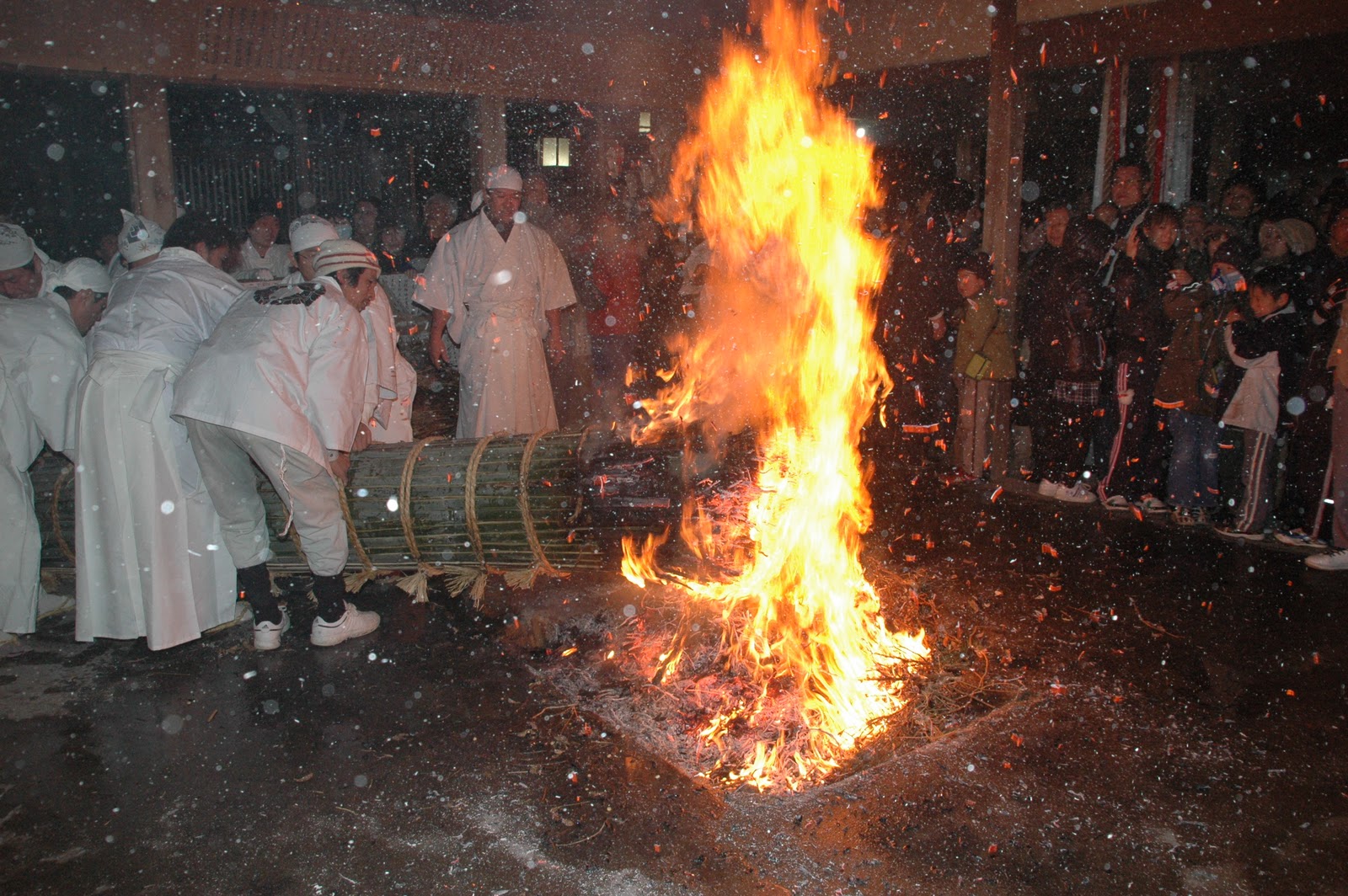
Before coming to Seika, I had the chance to peruse around the internet to see what the town would be like. Although most of the stuff wasn’t surprising, I kept running across pictures of a festival where what looked like a giant flaming log was being carried around. The festival was called “Igomori Matsuri,” and is apparently one of Seika’s more famous happenings. The festival looked like a lot of fun, and has been something I’ve looked forward to since coming to Seika. And on January 18th, I finally got the chance to go.

来町前に、精華町はどういうところかを分かるようによくインターネットで検索しました。多くのことは想像していた通りだったけど、氏子に運ばれている炎の丸太みたいな大松明の祭りの写真を何回も見ました。いごもり祭と言われて、精華町の有名な出来事のようでした。祭りはとても楽しそうだったから、来町から一番期待していること一つでした。そして、1月18日(火)にいよいよ行けました。

The festival is held yearly at Hosono Shrine in Seika, and consists of taking a huge torch made from bamboo trees and bean stalks, and then lighting the thing on fire and carrying it around the city streets. Though they’ve never weighed the torch, people at the festival told me it was about 80 kilos. And though it’s passed off between the parishioners now, apparently in the good ol’ days the torch was carried by only one man at a time. According to legend, the tradition was started to appease the vengeful spirit of Emperor Kaika’s brother Takehani Yasuhiko, who was killed for treason over 2000 years ago.

いごもり祭は毎年精華町の祝園神社で行われます。竹の木と豆の木でできている大松明に火をつけって、白装束の男の氏子に担がれ町内を練り歩きます。大松明を量ったことがないけど、ベテラン参加者によると80キロもあります。さらに、現在は何人かの氏子に交代で担がれているけど、昔は一人で担がれたそうです。伝説によると、2000年前に朝廷に背いた崇神天皇の弟武埴安彦(たけはにやすひこ)はこの辺りに討伐されて、鬼神になりました。武埴安彦の鬼神を鎮めるように、いごもり祭が始まったと言われています。

The festival had yet to start when I got there, but food stalls were set up, and people seemed to be having fun just milling about and talking. I started talking with some local kids, and basically became their buddy for the night. I told them jokes, taught some English and repeatedly explained that no, gorillas, lions, and giraffes don’t roam wild in America.

着いたら祭りはまだ始まっていなかったけど、屋台などが設置されたし、皆さんが楽しそうでぶらぶらしていました。地元の小学校生達と話し始めて、冗談を言ったり、英語を教えたり、アメリカでは野生のゴリラ、ライオン、キリンがいないと説明したり、すぐ仲良くなりました。

Soon the festival got under way, and the men tasked with carrying the torch started a fire inside Hosono shrine. Now, I knew there would some flame and such, but I was not prepared for the fifteen-foot high inferno that burst out, with flames licking the roof of the wooden temple. It seemed unsafe at the time, but somehow I made it back alive. After letting the flames die down, the torch was carried out and started on it’s journey around Seika. The torch is followed by a compartment containing the god of the shrine, and it took them about an hour to complete the course. By the time they finally got back, the torchbearers looked beat, but really happy to have taken part.

そしていごもり祭が始まって、氏子は祝園神社内で火を起こしました。火はちょっと大きいと分かっていたけど、神社の天井に届く高さ4メートルの炎には覚悟できていませんでした。その時はちょっと危なそうでしたけど、ちゃんと生きて帰ってきました。不火になったら、大松明は氏子に担がれ町内を練り歩き出しました。大松明の後に神様が入っている箱が続いて、一時間後戻ってきました。氏子達は本当に疲れたみたいだったけど、参加できてうれしそうでした。

It was nice to see people of all ages at the event. These kinds of festivals are fun, not only because I got to see a huge burning torch this time, but also because you get to meet people from all age brackets and lifestyles. I spoke with everyone from elementary school kids to octogenarians, and learned a lot about the Igomori festival, and Seika’s history. Like town fairs in the States, Japanese festivals are a great place to meet people who, though you all live in the same town, might never run into otherwise. Admittedly though, American fairs usually don’t have giant burning torches, so this was a fun treat to see.

祭りを見れただけではなく、あらゆる年齢の人々と会えたから、いごもり祭が凄く好きになりました。小学校4年生から80歳代の方とも話して、いごもり祭と精華町の歴史について教えてもらいました。もう来年の祭りを楽しみしています。アメリカの祭りと同じで、日本の祭りで同じ所に住んでも普通に会わない人と会えるから面白いです。確かにアメリカの祭りはあまり炎の大松明がないから、いごもり祭を見れてよかったです。

Tuesday, January 11, 2011

Santa for a Day / 一日のサンタクロース


This happened a little while back, but because it was the highlight of my year, I want to share it. In late December, I got to dress up as Santa Claus and visit a day-care in Seika, and it was fantastic.

これがちょっと前の話ですが、一年の一番楽しかったイベントでしたから、皆に教えたかったです。12月下旬、私はサンタクロースの衣装を着て、精華町の保育所に訪問しました。本当に素的でした。

Admittedly, the day started out with me visiting kids under one year old, who upon seeing me promptly started crying. Though I felt bad about that, the teachers assured me that they cry when they see anyone new, so it’s kind of a given that a large bearded man wearing only red would freak them out a little bit. The older kids, on the other hand, were practically screaming with excitement when I (Santa) walked in the room. I sang them a few songs, answered their questions, and gave them presents that the teachers had helped prepare. I also got to pass out cards from kids in Norman, Oklahoma, Seika’s sister city. The kids were great, and it felt good to be able to make their day.

まず1歳下の児童と会いに行きましたが、児童達は私を見ると泣き出しました。気分が悪かったが、先生によるとその児童は知らない人を見たら泣き出します。体が大きくて赤い服で白ひげを生やした男を見ると、ちょっと恐がるのは当たり前ですね。しかし、サンタさん(私)が入った時に、年長児は興奮にワクワクしていました。子どもにクリスマス歌を歌って、質問を答えて、先生が準備してくれたプレゼントを渡しました。そして、精華町の姉妹都市オクラホマ州ノーマン市の生徒達からの手紙も渡しました。子どもたちは本当に凄くて、喜ばせるのはとても嬉しかったです。

When I got to work in January, there was a pile of cards from the kids at the nursery school on my desk. Sure, they were all addressed to Santa, but I was still touched.

1月に仕事に戻ったら、保育所の児童からの手紙は机のうえに置いてありました。もちろんサンタクロース宛でしたが、本当に感激しました。


Friday, December 3, 2010

The Seika Town Festival! せいか祭り!

Looking back through my predecessors’ stuff, it seems like the Seika festival is doomed to rain every year, or at least somewhat crummy weather. However this year bucked the trend, as visitors were treated to a beautiful fall day. Nearly 35,000 people came out to celebrate the event, which was filled with good food, lots of music performances, and fun games for kids.

前任者たちが残したファイルを見ていて、せいか祭りは毎年雨や悪い天気になる悪い運命があるそうでした。でも、今年のせいか祭りは傾向を抵抗し、参加者は凄くいい天気に恵まれました。34,000人の参加者がせいか祭りに来て、美味しい食べ物、音楽の演奏、楽しいゲームもありました。


Seika Global Network ran a booth again this year, where kids had got the chance to play a fun little quiz game with the questions ranging from geography, to animals, food, and even some about Christmas. The kids would pull a question from the mystery box, and if they could answer it correctly, they got a heart shaped balloon! Of course we gave them plenty of tries to get it right, and the parents may have helped out a little, but it was still great to see the kids learn something new about other countries. Of course there were quite a few funny answers, as one little boy said with absolute certainty that Santa rides a goat, and could not be persuaded otherwise.

せいかグローバルネットは今年もブースを出して、子供達に楽しいクイズゲームをさせました。クイズの質問では地理、動物、食べ物、クリスマスまで、色々な話題に及びました。子供はボックスから質問の一つを取り出して、それを答えたらハート型の風船をもらいました。もちろん何回答えさせたが、あと親にも手伝ってもらったが、子ども達が外国についてなんか習ったと思います。面白い答えもいっぱいあって、一人の小さな男の子は確実に「サンタさんは八木を乗るよ!」と答えて、他の答えに説得されませんでした。


On hand to help at the booth were volunteers from Seika Global Network, several Chinese students studying abroad in Seika and the surrounding area, and a few volunteers from a local High School who really helped out. I also got the chance to make some holiday cookies to hand out to special kids who answered the questions all by themselves. Although I woke up at 5 the morning of in order to finish them, they actually turned out to be a good idea since the balloons were so popular that we ran out early and had to start giving out the cookies instead! 

せいかグローバルネットのブースでせいかグローバルネットのボランティアと精華町周りに留学している中国人と近所にある高校の学生に手伝ってもらいました。そして、私は祭りの為にクッキーと作って、一人で答えられた子供にあげました。そして、風船が凄く人気で早くなくなったので、子供にクッキーをあげることになって、全部のクッキーを終わる為に当日5五時に起きたけど、助かりました。


Going out to events like this, I’m reminded how many kids Seika seems to have. The Keihanna Commemorative Park was filled with families who had come out to enjoy the day together, and there were more kids than you could shake a stick at. It was also great to run into kids from the schools I had visited, who remembered me and kept coming back to play and talk about all kind of things. I like to think they came to see me and not just to get a balloon, but it was still nice either way. With all the kids around, I really feel like Seika still has a lot of room to grow. I’ve heard stories about how much the town has changed since the first CIR came here over 16 years ago (he apparently had to do a host stay, since there were no apartments available.) Already in the four months I’ve been here, a small apartment complex was built next door, and a handful of shops open up around town, in particular a ramen shop, which I visit far too much. I have no idea how much the town will grow in the rest of my time here, but it’s going to be fun finding out.

こういうイベントに行くと、精華町は本当に子供が多いと気付きます。けいはんな記念公園で子ども達が大人より多く見えました。そして、私は訪問に行った学校の生徒達とまた会った、覚えてくれたから嬉しいです。その子ども達が風船のためじゃなくて、私と会うためにせいかグローバルネットのブースに来たと考えたいけど、どっちでもいいです。子供たちに囲まれると、精華町は本当に若い町で、まだ成長出来ると感じます。第一目の国際交流員は16年前に来たときから、精華町はもう完全に変わったと聞きました。私は来た時からの四ヶ月に、隣に小さいマンションが建って、少数の店も開店しました。私は働く二年間で精華町がどう変わるかちょっと分かりませんが、楽しみしています。

Wednesday, October 27, 2010

The Best Train in Seika
精華町の一番いい汽車

One of my favorite things about Japan is the whole train system. We don’t really have a good train system back in America, so I really like the ease and cheapness of the Japanese train systems. Of course, trains themselves are also pretty cool, so when I heard that I would get to go visit a man who had his own steam train, I was pretty excited.

日本の好きなこと一つは鉄道網です。アメリカの鉄道網はあんまりよくないので、日本の鉄道網の楽さと安さなどが好きです。そして、列車もかっこいいです。そのため自分の汽車を持っている人を訪ねることができた時、とてもワクワクしました。

Apparently the owner had for many years been inviting local daycares to come and let the kids ride, and I was going to help out in crowd control/entertaining the kids. Although I had heard of this model train, it was really cool to see it for myself. At a little over three feet long and powered by steam, it’s an adorable little thing, but had a surprising amount of kick to it. We set the kids up to ride, and they started squealing with delight. The whole thing clearly made their day, although they were most enamored with the tunnel we had set up for them.

汽車の持ち主は毎年、保育所を呼びかけて子ども達を招待して乗らせています。今回僕は子どもの世話をしたり楽しませたりしました。この前任者にこの汽車について聞いて事がありましたが、本当に凄かったです。1メートル強の長さで、とても小さかったですが、意外と強かったです。僕たちは子ども達を乗せると、子ども達はキャーキャ笑い出して、とても喜んでいるようでしたが、子ども達が一番気になったことは僕たちが建てたトンネルでした。

I also got a chance to actually talk with some of the kids, which was really fun. They were all fairly young, and my favorite question of the day when one girl asked if I was Korean. I’m about as Caucasian as it gets, but this wasn’t the first time this kind of thing had happened (kids have asked me before why I have a foreign sounding name, implying that they think I’m Japanese.) It occurred to me that maybe some of these kids had never met a foreigner before, and so didn’t have any idea what one would look like. I don’t know if that’s the case, but it certainly is interesting to see how really young Japanese kids react when meeting a non-Japanese person for the first time. But before I could respond, saying that no, I was American, and giving some long winded lecture on national identity, another girl blurted in, “You have an eigo (English language) face!” So there you go. After that, they told me they were learning English words for fruit, so we had a great time playing the “What’s that fruit?” game.

そして、子ども達と話す機会もあり、凄く楽しかったです。そして、一人の女の子に「韓国人ですか」と聞かれました。僕は完全に白人ですが、こういうことを聞かれる事は何回もありました。(子ども達は前に、「何で外国っぽい名前ですか?」と聞き、僕が日本人だと思ったようでした。)この子ども達は外国人に会ったことがなかったかもしれないので、外国人のイメージもないと思いました。そういうことかどうか分からないですが、日本の子ども達の、初めての外国人との出会いを見るのは面白いですね。しかし、僕が答える前に、他の子は「お兄さん、英語の顔しているよ!」と言いました。そうですね。後、皆が果物の英語の名前を習っていたときいて、「あの果物何?」というゲームをしました。

The day ended before I would of liked it, but it was really great to see all those kids so happy.
アッという間に終わりましたが、子ども達の笑顔は最高でした。

Plus I got to do this.
そして、こういうこともできました。

So a great day all-in-all.
いい日でした。

Wednesday, September 15, 2010

精華町の第37回町民体育大会 / Seika’s 37th Townspeople athletic festival

ラジオ体操 第37回町民体育大会
This past Sunday, Seika town held one of its biggest events of the year, the 37th Townspeople Athletic festival. Figuring that it would be a good way to meet people and get my face out there, I volunteered on a whim. Of course at the time I didn’t realize that the event grounds were 3 miles away from my house, and I’d end up going there by bike at 7 in the morning, but I’m still really glad I got to participate.
先週の日曜日に、精華町の大きいイベント、町民体育大会が行われた。精華町民に会えるようにボランティアとして参加する事にした。その時で、東光小会場は私の家から5キロメートルで、朝7時に自転車で家を出発することになると知らなかったけど、体育大会に参加できてよかった。

I had heard of school athletic festivals in Japan, but this was my first encounter with a town event. The town was broken up into neighborhoods, and although not every district participated in the events, they all came out to cheer. Some groups were clearly very prepared for the event, with matching t-shirts, jerseys and flags, so I was a little sad that I had no one with which to match fashion wise. The events were basically split into two categories, “free” events where anyone could participate, and “team” events, where the winning group got points for their neighborhood. The team with the most points won a fancy trophy and presumably bragging rights for the rest of the year.
学校の体育大会は知っていたけど、町の体育大会は初めてだった。町民の皆さんは自治会ごとに分かれ、全ての自治会が参加したわけではなかったが、たくさん人が応援しに来た。自治会ごとに同じTシャツやジャージを着たりしていた。ポイントを一番多くとったチームは立派なトロフィーをもらって、勝利を誇ります。
50メートル走 第37回町民体育大会
The turnout was amazing, and over 6000 thousand people came, despite the fact that the sun and the dirt area made it feel like death valley. From babies to octogenarians, you could see all ages and all manners of people coming out to compete.
とても盛況で、砂漠ほど暑かったのに、6000人以上いたよ。赤ちゃんから80代ぐらいのご高齢の方まで、本当にいろいろな人が参加した。

The events ran the gamut from serious business to ridiculously silly. Lots of the kids who came competed in a 50-meter dash and the little guys ran their hearts out. Of course there was the ol’ “get the ball in the basket game” and tug-o-war (I really wanted in on that) but some surprises (at least to me) made an appearance as well. There was a team jump rope event, where 10 kids had to jump rope in time to get their count up. Although many teams clocked out around 5 or 10 the best score of the day was 52! 52 consecutive times! I can’t even do that jumping rope alone! My favorite event though was definitely the over 50 ball push. Though the explanation doesn’t do it justice, it was great to see some of Seika town’s older residents playing around and just being kids again.
競争は、とても真面目のからおかしなものまで、幅広くあった。多くの子どもが50メートル走に参加して、心を躍らせた。玉入れと綱引きもあったけど、僕はちょっとびっくりした競争もあった。大なわとびもあって、子ども10人が連続して、同時にジャンプしないといけなかった。ほとんどチームは5回か10回ぐらいしか出来なかったけど、当日の一番いいチームは52回も出来た!52回!僕は一人でもできないとおもう~~。でも、僕の一番好きなイベントは大玉ころがしだった。参加者は50歳以上で、中高年の方が子どもの頃に戻ったように楽しんでいたそうで、本当によかった。
大玉ころがし 第37回町民体育大会
Of course the most serious event was the relay, and the effort of some of the participants was inspiring. Although the fast people were obviously impressive, I was more moved by the people who fell down or bit it hard, and got back up instantly. There was no chance they could win anymore, and no real prize in the end, but they still gave it their all, despite the pain and hurt.
最も真面目な競争はリレーレースだった。本当に参加者の皆さんに感動した。一番早かった人はすごかったけど、転んですぐ起き上がれた人のほうが僕に影響を与えた。勝つのは無理になっても、賞をもらわなくても、痛くても、全力でがんばった。すごかったよ。

Another little plus was the music they had playing. While one would expect a lot of Japanese songs at a Japanese athletic festival, the presence of “Eye of the Tiger,” from Rocky and Kenny Loggin’s “Highway to the Danger Zone” threw me for a bit of curve. I suppose that pump up songs are effective no matter what the language though.
体育大会で使われた音楽も面白かった。僕は日本の体育大会で日本の音楽があるはずだと思ったけど、「ロッキー」と「トップガン」のテーマソングが鳴って、ちょっとびっくりした。熱中させる音楽はどの言語でもいい効果を住むね。

In the end, it was a great day, and I got to meet and talk to some of the residents of Seika town a little more in depth. Despite the heat and the intense sunburn I got (I look like a hairy tomato) I fully intend to volunteer again next year. I’ll just wear a bigger hat next time.
精華町民と会ったり話したりできて、本当にいい日だった。暑くて、僕はとても日焼けしちゃったけど(本当に毛深いトマトみたい)、来年も絶対参加したい!しかし、今度は日焼け止めローションをつけておく。
優勝した精華台三丁目 第37回町民体育大会

Tuesday, August 17, 2010

I'm vaguely famous!

Look who showed up in the Kyoto Newspaper! The picture's not that bad either (better than any of my ID pictures at least.)
Here’s a translation for those who struggle with Japanese.


“Seika Town’s New Coordinator for International Relations, American Kai Wiesner-Hanks”
=Seika Town Minami Ina Yazuma
From a young age, Kai loved Japanese food and had a strong interest in Japan, studying Japanese history in college. He also studied abroad in Tokyo, and was a member of the Taiko and Judo clubs. Having just graduated in May of this year, believing that this could be a chance to improve his Japanese, he applied to be a coordinator for international relations.
He says that Seika town and Tokyo are very different, and that Seika is a much greener place. There are also many children in town who often call out and talk to him in town. He hopes to teach these children some American games to held spread internationalization. Because he likes to cook, he also wants to try and teach Japanese people some recipes they may not know.”

Well, that is pretty much what I said. The cooking will be interesting to see how it goes, but as long as I can teach Japanese people to make a burrito sometime, I’ll be happy.

Monday, August 9, 2010

The New CIR in Seika Japan

Seika Town 精華町So apparently in order to celebrate the opening of this blog, the clouds disappeared today, so you can see the Nara, Kyoto, and Osaka without too much trouble. Of course the sun being out also means it is approximately nine thousand degrees and my pale skin turns Kentucky fried in a manner of seconds (Japanese summers are not for the faint of heart), but it is still amazing to look out and see so much of Japan’s history just a stone’s throw away.


Oh, by the way, name is Kai and starting last week Wednesday I took over as the Coordinator for International Relations (CIR) for Seika town, a town of over 36,000 people just south of Kyoto and north of Nara. The title implies much more power than I actually have (assistant/ helper to the planning division would be a more apt title), but I still get to do a variety of things to help promote internationalism in the town. This can run the gambit from writing the Town’s English newsletter to translating documents for the foreign residents of the town, and even helping out at events. I may even get the chance to plan and event if I can manage my schedule out right.


However, despite what I may say, I’m not the main focus of this blog. Rather, this blog is about the place that I have the good fortune of being able to work, Seika Town. Located about 15 minutes north of Nara City, an hour east of Osaka City, and just 30 minutes south of Kyoto City, Seika is basically smack dab in the middle of traditional Japanese Culture. After having lived in Tokyo for a year, it is nice to see a more traditional side of Japanese life, and the idyllic scenery (Japan is by far the greenest country I have ever seen. Well, except for Greenland) and wonderful people make me think that I’ll be very happy working here.


Seika Town Hall 精華町役場
Speaking of the people, I will say this about Seika; there are an astounding amount of children here, and I hope that I will get the chance to interact with these kids and teach them something about my home and American culture. They certainly seem receptive to me and I’ve already played hide and go seek with a few of them when I should have probably been working. Of course, there’s more than just kids here, and the adults I’ve met so far have been great in teaching me all about Seika Town and Japan. In particular, the folks here seem very excited to teach me the Kansai dialect. It’s great to feel so welcome, even though the difference in dialect can sometimes make me feel as if all of my Japanese study was for nothing.


Even though I’ve only been here in Seika Town for a little while, I’m already excited for the coming years. And for it to stop being so hot.


このブログの公開をお祝いする為に晴れたみたいですね。本当に奈良と京都も、そして大阪までも見えるかもしれません。凄いですね。しかし、晴れているというとめっちゃ暑いというわけですね。私の白い皮膚は十秒後フライドチキンのようになってしまうと思います。でもまだ、この所は本当に凄いですね。

ところで、私はウィズナー・ハンクス・カイと申します。先週の水曜日から精華町役場で国際交流員として働くことになりました。簡単にいうと、私の仕事は国際化を進めることです。これから私は「いちご」という外国人の向けのニュースレターを書いたり翻訳したりイベントで手伝ったり、本当に色々な事をします。そして時間があったら、自分のやりたいイベントも企画できるかもしれません。
Seika Town 精華町でも、このブログのテーマは私ではないですね。このブログのテーマは精華町よ!奈良と京都と大阪の間中にあって、本当に日本の文化を感じられると思います。私は一年間東京に住んでいましたが、日本の伝統的なところを見ることが出来るのを本当に喜んでいます。景色もきれいだし、人たちも優しいし、精華町で働くのを楽しみしています。

人たちといえば、精華町では子供さんが本当に多いですね。この子供にも自分の文化を教える機会があるのは喜んでいます。もちろん、大人の方も優しいです。もう精華町の人たちにたくさん教えてもらいました。

たった一週間だけでしたが、もう精華町にこんなに感動したので、この二年間を本当に楽しみます。