Friday, October 28, 2011

The 9th Children's Festival! 第9回の子ども祭り

I know it’s been a while since the last update, but let me tell you, it’s hard to get anything done in Kyoto in summer. Honestly I was having trouble not melting most days. This heat also means that there’s a distinct lack of events due to the overwhelming heat.

最近ブログの記事全然書いていませんですが、すみませんでした。でも、京都府の夏は本当に死ぬほど暑いです!だから、私もあまりやる気がありませんでしたが、イベントや行事などもすくなかったです。

But now that Seika is heading into fall the calendar is starting to fill up again. For instance last Saturday we held the 9th Seika Children’s festival in the Mukunoki Center. The festival last year is still one of the highlights of my time here, so I was really looking forward to this. Like last year I worked at the Seika Global Network’s booth, where we supervised kids in making some crafts.

ただし、もう秋になったから、これからイベントなどが多くなります。例えば、先週の土曜日に「第9回こども祭」が精華町のコミュニティセンターであるむくのきセンターで行なわれました。去年の子ども祭が精華町にとても思い出になりましたので、今回も楽しみしていました。去年と同じように、せいかグローバルネットのブースで、子ども達に手作りを指導しました。

The children’s festival was started off with a couple of performances. A youth brass band covered a song from juggernaut girl group AKB48, which I don’t necessarily associate with a big-band sound, but somehow they made it work. Next, a group of preschool kids sang their hearts out, and though their pitch needed a little work, you’d be hard pressed to find a cuter choir. Lastly was the Seika boys and Girls chorus who will be performing at the National Culture Festival at the start of next month.

今年の子ども祭は演奏で始まりました。まず吹奏楽団がAKB48の歌をカバーしました。AKB48の歌は吹奏楽団とあまり合わないと思いましたが、この吹奏楽団はよくできました。町内の保育所の生徒たちが歌ってくれました。最後に来月の国民文化祭で演奏する精華町の少年少女合唱団でした。

After the performances the kids scattered around the arena, trying a lot things at the different booths set up in the arena. We at the Seika Global Network booth, we wanted to teach the kids a bit about our sister city, Norman, and the state of Oklahoma. So knowing the long history of native Americans in the state, we decided to make dream catchers.

演奏の後、子どもたちが、アリーナに設置されて体験ブースに歩き回りました。せいかグローバルネットのブースでは、姉妹都市であるノーマン市のことをちょっと紹介しようと思いました。そして、ノーマン市とオクラホマ州で、ネイティブアメリカンの人たちの歴史が深いから、ドリームキャッチャの作り方を教えることにしました。

Other booths had kids trying out traditional instruments, learning sign language, playing with tops, and making paper fans with their pictures on them. The fire department even had a place where kids could try on a fireman’s outfit and learn how to make all kinds of knots.

他のブースで、伝統的な楽器をひいたり、手話を習ったり、独楽を回転させたり、自分の顔の写真が写しているうちわをつくったりできました。さらに、消防署のブースで、子どもが消防服を着たり、つよい結び目の作り方を教えてもらったりできました。

Unfortunately I was suffering from a nasty cold, so I was initially less than enthusiastic. But the kids did a great job of cheering me up, and a lot of them remembered me (more likely my facial hair) and asked when I was coming back to see them.

私はひどい風邪をひいていましたので、最初はあまりやる気がありませんでした。でも、元気な子どもたちの影響を受けて、私もハイテンションになりました。そして、多くの子どもは前の学校訪問を覚えってくれて、今度いつ行くかをよく聞きました。本当に感動しました。

Though I was about ready to collapse by the end of the day, it was great to be able to interact with so many kids, and teach them a little bit about one part of American culture.

4時ぐらいで倒れそうになりましたが、たくさんの子どもと遊びましたので、とても楽しかったです。そして、アメリカ文化の一部を紹介できて良かったと思います。


Wednesday, September 7, 2011

Bon Dance at the Japanese Language Class

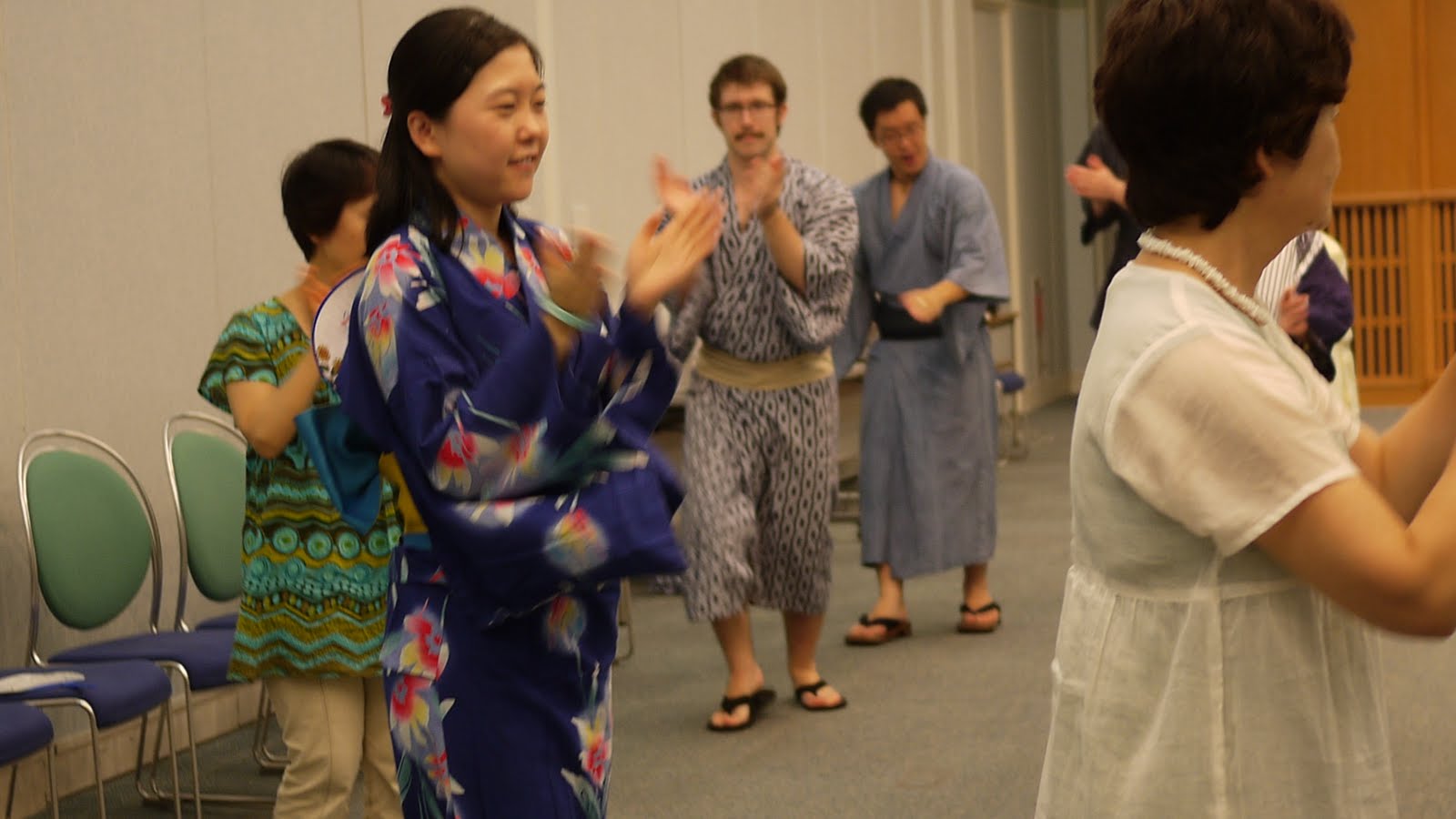
So I know it's a little late, but on August 2nd, all the students and teacher's of Seika Global Network's Japanese language class got to do the Bon dance!

8月2日にせいかグローバルネットの日本語教室で生徒たちと先生たちが盆踊りしましたよ!ちょっと遅くなりますが、写真を是非見てください。


If you're interested in the Japanese Language class, check out their blog, or contact me.
日本語教室に興味がありましたら、以下のリンクを見て、または私に連絡して下さい!


Tuesday, July 26, 2011

Gion Matsuri / 祇園祭


 Though I enjoy it when people, especially family, come to visit, I occasionally have trouble when showing them around Kyoto and Seika. By this point I have seen pretty much every famous temple, shrine and sushi bar this side of Osaka. So while my guests are all in awe of the beautiful Japanese architecture and culture, I’m wondering where the nearest all you can eat place is. However, this past week, my mother was kind enough to come when one of Japan’s biggest festivals, Gion Matsuri, was being held. As I’ve never been, this seemed like a good chance for both of us to see something entirely new.

 
 京都府で住みはじめたときから、友だちや家族がよく遊びにきます。京都府の寺や神社などの日本文化の遺産は世界中に知られているので、日本人の友だちや家族が私と会うためだけでなく、京都の有名な所にも案内してもらおうと来ます。ただし、最近案内することはちょっと大変になりました。それは、もう一年間京都府で住んでいましたし、色々な人を案内したので、最も有名な寺や神社を全部何回も見ました。だから、その友だちは凄く感動しても、何回も見た私にとって、そういう初めての感動はもう感じません。でも、先週母親が来てくれていた間に、知らない日本人に一人もいない祇園祭が開催されていたので、久しぶりにすごくワクワクしました。

 The festival was started in the 800s, when a terrible plague was devastating Kyoto. Deciding that the gods were miffed about something, the emperor decreed that 66 halberds, one for each prefecture, be raised at Yasuka Shrine in the Gion district to appease the gods. This practice was repeated every time a plague hit, and the festival became a yearly event in 970. Over time Gion Matsuri gradually changed into a kind of parade, where portable shrines were carried throughout the town.
 祇園祭は千年以上の歴史があります。800年代に、京都市でひどい疫病が流行していましたので、神様を鎮めて疫病を退散してもらうように天皇は八坂神社で当時の日本列島内の国の数66ヵにちなんで国矛を66本立てました。その時から、京都市で疫病が発生するたびに矛を立てまして、970年から毎年の行事になりました。時間がたち、矛を立てる習慣がなくなりましたが、現在の山鉾巡行の形になりました。

 Gion Matsuri lasts the entire month of July, and has more events than you can shake a stick at. The most popular and famous has to be Yamaboko parade, a parade featuring giant floats known as Yamaboko that goes down on the 17th of July. The Yamaboko floats(technically two distinct styles, one called yama and one called hoko) can be huge, towering over 25 meters and weighing in at near 12 tons and requiring a team of near 50 men to pull them. All the floats are decorated with beautiful tapestries, some woven in areas like Persia, Belgium and Turkery.

 祇園祭は7月1日から31日まで開催されていますので、本当に数え切れないほど行事があります。一番有名なのは7月17日に行なわれる山鉾巡行です。山鉾というのは、2種類の山車(山と鉾)なんです。そして、鉾の山車は昔立てた矛を代表し、息をのむほど大きいです。高さ25メートルで、重さ10,000キロ以上で、50人に引っ張られています。

 However, as Mom and I found out, the three days leading up to the parade are a blast too, and in some respects, the real “festival” part of Gion Matsuri. The floats are set out for people to see and even go into, and thousands of people wander up and down the streets of Kyoto. Food vendors open up and start selling friend chicken, pineapple, and nearly every corner had someone hawking cold drinks and beer. Almost every girl was decked out in her yukata, and it was clear that the Japanese folks were getting just as much fun having a “Kyoto” experience as my mom and I were.
 さらに、山鉾巡行の前の3日間も魅力があります。それぞれよいよいよいやま、よいよいやま、よいやまと呼ばれている3日間で、巡行に出る山鉾は道に置いてあり、柔らかな光を出している灯がついてます。人々は山鉾を間近で見れますが、入ってみることができる山鉾もあります。屋台が出て、商人たちはたこ焼やから揚げなどを売り出しますが、各街角で冷たいお茶やビールを売っていました。何万人もの人が京都市の道を埋めていましたが、洋服より浴衣を着ていた人のほうが多そうでした。確かに、「京都」や「日本」的な感じを楽しんでいたのは僕とお母さんだけではありませんでした。

 The parade itself was quite something, if just for the fact that the guys pulling the floats didn’t pass out from heat stroke. The sidewalks were packed with people and despite the fact that progression of the floats was slow (you wouldn’t move fast if you were dragging 12 tons either), watching the huge floats moving through the city was kind of like seeing ships sailing through the city streets. Musicians followed every float, and some had dancers or performers following along, swinging staffs or hopping around.
 山鉾巡行も見事でしたが、その何十メートルの高さがある山鉾の漸進を見ると、ビルが船になったようでした。たしかに山鉾に乗ったり、音楽をひいたりするのは楽しそうでしたが、一番尊敬していたのは引っ張っていた男たちでした。重い物を持ち上げるのが大好きな私でも、その10,000キロ以上がある山鉾を朝から夜までしゃく熱の道で引っ張ったら、イエス様と会う機会をもらうと思います。
 
Gion Matsuri was exciting not only because we got to watch huge floats rolling down the city streets, but also because I got to show it to my mother, and be just as excited as she was about it. Hopefully it’ll be just as fun next year.

 もちろん母親が滞在期間色々なところに案内しましたが、一番印象を与えたのは祇園祭でした。それは、お母さんと一緒に、そして同じほど楽しめましたからです。

Wednesday, July 20, 2011

Animal Refuge Kansai (ARK)・ 「アニマルレフュ-ジ関西(ARK:アーク)」

 One of the downsides of living in an apartment is that it is generally forbidden to own pets. Having grown up surrounded by cats and dogs, I do feel a distinct lack of fluffy animals in my life. So when a coworker asked me if I wanted to volunteer with her at one of Japan’s best animal shelters, ARK animal refuge center, I literally jumped at the chance.
 日本でアパートに住むと、ペットを飼うことがほとんど禁止されています。ずっと犬と猫に囲まれて育った私にとって、ペットなどがいないとやっぱり寂しくなります。だから、同僚に日本の動物保護施設である「アニマルレフュ-ジ関西(ARK:アーク)」にボランティアとして行かないかと誘われたときに、好機に飛びつきました。

 ARK was started in 1990 by an English woman living in Japan who, upset the lack of facilities for animals in Japan, enlisted some friends to open ARK and give some dogs a place to call home. Though starting small, the organization began to grow and was instrumental in housing hundreds of dogs left homeless after the Hanshin-Awaji earthquake hit Japan in 1995. Nowadays the shelter houses some 200 dogs, as well as cats, geese, rabbits, goats and even a fox.

 アークは1990年、日本在住のイギリス人女性に設立されました。彼女はかわいそうな犬たちに安心して暮せる場所を与えようと、友人らとともにアークを作り出しました。小規模からはじめましたが、だんだん拡大して、そして阪神淡路大震災で家を失った何百匹の犬たちを助けました。現在アークで二百匹ぐらいの犬が飼われています。そして、猫、アヒル、ウサギ、キツネもいます。

 My coworker and I got there pretty early in the morning and after a quick introduction were put straight to work as dog walkers. Since ARK is located far up in the northern countryside of Osaka, there is plenty of space to walk and explore, and with so many young and “energetic” dogs, dog walking seems to be one of the most important activities volunteers do.


 同僚と私は朝早く行きましたが、ボランティア活動案内が終わるとすぐに、犬を散歩しました。アークは大阪府の北の田舎にありますが、施設がとても広くて、犬を散歩させたり遊ばせるところが十分あります。さらに、若くて元気な犬がたくさんいますので、犬の散歩はボランティア達の一番大事な仕事のようです。

 Our first group of dogs was a whole heard of the smaller breeds, including a toy poodle, a miniature pinscher, and quite a few Chinese crested, both the haired and hairless varieties. Despite the fact that many of the dogs had come from breeders with little chance for socializing and play, they were pretty much all very excited to be out and about for their walks.

 私たちがはじめて散歩させたのは、ミニアチュアプードルとミニアチュアピンシャー、そしてチャイニーズ・クレステッド・ドッグなどの小型犬の群れでした。多くの犬たちはブリーダーから助けられ、前は遊ぶ機会や人間とふれあう機会はすくなそうだったのに、大半の犬は散歩に凄くワクワクしており、しっぽの振りもとまりませんでした。

 Taking them out in twos, we got to wander all over ARK, which is a huge complex. The dogs of course were super excited to sniff and roll around in all manner of things, and even the few that seemed nervous leaving the safety of their pen warmed up to the walks soon enough. Many of the dogs there were also rescued from areas destroyed in the Tohoku Earthquake and tsunami, so it was really good to see them bouncing around and being happy, just like normal dogs.

 二匹ずつで犬とアークあちこちウロウロしました。やっぱり犬たちが色々なもの匂いだり土の上で転げまわったりしました。そして最初に恐がっていた犬もちょっとだけ散歩したから安心したように見えました。東北大震災により家を失った犬も決行いましたが、その子も犬らしく飛び回ったり元気で遊んだりしている姿を見ると心が温まりました。

 Lunchtime gave us a little time to breath and rest, as well as interact with the dogs kept inside to keep from overheating. One bulldog in particular captured my heart with her friendly attitude and expressive face. This is despite the fact she would eat the food she kept throwing up. Dogs are majestic creatures, eh?

 昼ご飯の間にちょっと息をつくことができましたが、暑さをしのぐため、冷房の効いた部屋に入れられた犬たちともふれあうことができました。特に一匹のブルドッグが友好的な性格と表情豊かな顔で私の心をうばいました。はいた物を二回も食べたにもかかわらず、好きになってしまいました。犬って、壮大な動物ですね。

 As the afternoon heat was too much to take dogs for a walk, our next task was “socializing cats,” basically playing with and brushing some of the cats housed at ARK. The older cats had clearly gone through a lot, with some missing eyes or parts of their tails, but they were some of the friendliest and most playful cats I had ever seen. As anyone who owns cats can tell you, an extremely loving cat is about as rare as a fluffy iguana, but these guys were all clamoring for attention and love. There were also bunches of kittens, and as adorable as they all were, it was all I could do to keep from taking them home myself.

 1時から3時の間はやっぱり犬を散歩させられないほど暑くなりましたので、次の仕事は猫たちとのふれあいになりました。「ふれあい」と言っても、実際にアークで飼われている猫たちと遊んだりブラシをかけたりすることでした。猫のなかには、目が抜かれた、またはしっぽが切られた猫も何匹かいましたが、中年の猫は前に大変な生活だったようです。ただし、この猫たちは見たことないほど人になついていて、遊び好きな猫でした。猫を飼っている人は分かると思いますが、そんなに人に対して愛情を見せる猫はものすごく珍しいが、この猫たちは愛されたがって、人の注目されたがりでした。子猫もたくさんいましたが、あまりに可愛かったので、連れて帰りたいほどでした。

 
  We were then set to brushing the dogs, which is always a right bit more difficult than brushing cats. The brushing generally turned into a game of tag, as you’d try to grab the dog and brush it a few times before he’d inevitably bound away. But since summer in Japan is closely reminiscent of summers on Venus, brushing the dogs can be just as important as walking them. So despite the fact that it ended up looking more like wrestling than grooming, we made sure the pups were looking mighty fine.

 犬をブラシすることになりましたが、やっぱり猫より犬がブラシされることを嫌がるから、ちょっと難しかったです。実はブラシというより鬼ごっこになってしまいましたが、日本の夏は大変暑いので、いらない毛をブラシで抜くことはとても大事です。犬たちをちゃんとおしゃれにしました。

 After one more quick walk with two new friends, we finally had to say goodbye, but are sure to be back. It’s good knowing that there are places like this in Japan working to help abandoned or abused dogs and cats. Personally, I got to play with puppies and kitties, which totally made my week. We also ran into lots of other volunteers, who ranged from children to retirees, with some people clearly being regulars and visiting every week. Like every other animal shelter, ARK is always looking for volunteers, so any help would be great.

 最後に友だち二匹を散歩させたら、いよいよ別れの時間になりました。でも、絶対またいきます!日本にこういう捨てられて、または傷を負った犬や猫たちを扱う施設があるとうれしいです。そして、個人的に言うと、犬や猫と遊べたので、もの凄くハイテンションになりました。そして、子どもから定年退職後の夫婦までのボランティアに会いましたが、毎週来ている人も少なくありませんでした。他の動物保護施設と同じで、アークはいつもボランティア募集中です。

 If you’d like to know more about ARK and what they do, check out their homepage:

 もしアークに興味がありました、以下のリンクをご覧になってください。

http://www.arkbark.net/?q=ja/

Friday, June 10, 2011

Kamo Walking Tour / 加茂町のウォーキングツアー

   The rainy season has started in Japan, and honestly, I am just not a big fan. The sun rarely pops out, you can never dry your clothes since it’s always wet, and riding a bike in the rain is about as easy as walking through molasses.
   最近日本の梅雨が始まりましたが、正直あまり好きではありません。いつも曇りや雨で、服も乾かないし、雨の中で自転車を乗るのは本当に無理です。

   However, the upside is that all the water works magic for all the plants and trees, so on the off chance it’s not rainy and cloudy the scenery is staggeringly beautiful. And thanks to clear skies that’s just what we got to enjoy this past Saturday on Seika Global Network’s yearly walking tour.

   ただし、その雨が木やほかの植物を青々とさせる、晴れた日の景色は息をのむほどきれいです。そして、先週6月4日(土)は凄く晴れたから、せいかグローバルネットのウォーキングツアーでその景色を楽しめました。

   Put on by the Seika Global Network, the tour aims to help students of an English guide class practice their English speaking skills and learn how to lead tour groups around. The tour ran through a small town to the east of Seika called Kamo, and 24 people came along for the adventure, including 8 foreigners.

   このウォーキングツアーはせいかグローバルネットに主催によるもので、英語ガイド講座の生徒たちに英語を使える機会、またツアーガイド体験のイベントでした。ウォーキングツアーは精華町から東にある加茂町で、外国人8人を含め、合計24人がしました。

   The first stop was the Gansen temple, a temple that despite being rebuilt in 1987, has hundreds of years of history. There was apparently a large complex to start with, but over the years the rest were burnt down in civil wars, leaving only the main hall and a pagoda. The pagoda is a real treat though, peeking out of the green forest, and the splash of bright orange among the green backdrop was really beautiful.

   1987年に再建された何百年もの歴史がある岩船寺からツアーを始めました。昔もたくさん同様のものはあったらしいですが、何回も戦火により焼失したから、現在は本堂と三重の塔だけが残っています。緑の森から空に向かって突き刺す三重の塔はすごい見物でした。

   Our tour then carried us onwards, through forests and back roads to see the sekibutsu, the real draw of the tour. Sekibutsu, (literally “Stone Buddha,”) are carvings or statues of different Buddhas, meant to protect people or sometimes grant request. The most famous of these are the Jizo statues, guardians of children who died before their parents, and you can see them spread across Japan, easily recognizable by their red scarves and bibs. But beyond the Jizo, there are many different kinds of sekibutsu, and the path through Kamo is famous for these images, including different statues like the “Slit-neck” Buddha and the laughing Buddha that we saw on the tour.

   それから森と裏道をブラブラ歩いて、石仏を見ました。石仏は人を守ったり人のお願いをかなえたり、石に彫られた仏像です。石仏のうち子どもの守護の「お地蔵さん」はいちばん有名で、あっちこっちによく目かけます。お地蔵さんだけではなく、石仏は色々な種類がありますが、ツアーで見た一願不動やわらい仏などもあります。

   The sekibutsu seemed to be hidden away in all manner of places, and it was a lot of fun winding through the woods to suddenly come upon a huge collection of statues or a fearsome Buddha carved in the rocks. My personal favorite was a giant carving of Amida Buddha, several meters high and staring out from across a valley at us. I was totally sure we could walk up and get a closer look, but as the grass was apparently full of snakes, good sense won out.

  そして、石仏は隠れていたようでした。 私達はよく角を曲がると、急に大きい石仏と直面しました。一番気になった石仏は谷の反対側から見詰めている大門仏谷の阿弥陀石仏、何メートルもの高さがありました。ちょっと遠かったから、近づいていいかなとおもいましたが、ガイドの方から草むらに蛇がたくさん隠れていたと注意があったので、良識に従いました。

   We also got to stop at Joruri Temple where a collection of nine Buddhist statues, made nearly a thousand years ago, are on display. Even now, there’s always something striking about seeing things that old. It’s always cool to see stuff that is about 4 times older than the United States, and were carved at a time when Robin Hood was supposedly prancing about Sherwood forest.

   平安時代後期に作られた阿弥陀如来坐像9体がある浄瑠璃寺にも行っていました。今も、そんな昔につくられたものを見るとやっぱり感動するでしょう。その如来坐像はアメリカ合衆国の設立より4倍ぐらいふるくて、ロビン・フッドに時代に掘られていたなんて、ちょっと信じられません。

   Of course the temples and Buddhas were very pretty and had a certain charm, I just as impressed by the nature surrounding us. Like I said, all the rain made the scenery greener than a hundred dollar bill, and as the wind blew through the trees, it looked like green waves were rippling across the mountains. Now that I’ve lived in Seika for a while, I tend to forget how beautiful the landscape of Kyoto can be, and this walk was a good reminder.

   お寺と石仏は確かにきれいで迫力がありましたが、周りの自然に同じほど感銘しました。梅雨のおかげで景色が豊かな緑色になって、風が木を吹き抜けると、緑色の波が山に押し寄せているのようでした。もう精華町に10ヶ月ぐらい住んでいるので、京都府の景色はどれぐらいきれいかを忘れてしまって、このウォーキングツアーで思い出しました。

   And there were also cats, which always makes things like, 10 times better.

   あと、猫ちゃんもいました~。

Tuesday, May 24, 2011

Chion Temple Handicraft Market 知恩寺手作り市


Held on the 15th of every month, the Chion temple Hand craft market (Chion-ji Tezukuri Ichi) is a veritable smorgasbord of handmade crafts, food, and art. Held at the Chion temple in Kyoto city, the market has around 350 booths, all of which sell handmade goods. Not that I needed anything, but wandering around and seeing the cool stuff creative people can make is always a good day.


毎月15日に開催されている知恩寺手作り市は手作り工芸品、食べ物、アートの大収集です。京都市内の知恩寺で行われて、手作り市約350ブースがあって、手作り物のみ販売します。私は別に買いたいものがありませんでしたが、想像性のある人が作ったものを見るのは楽しい一日になります。

This was my second time going and unlike the first time where rain and wind conspired to ruin the day, this time it was sunny and warm, with perfectly clear weather. Of course, this also meant that the crowds were out in force and just trying to get anywhere was a battle in and of itself. Still though, jostling with people and fighting your way through a crowd to investigate something that catches your eye is part of the charm of these markets.

今回は二回目の参加で、一回目に雨がちょっと降っていて寒かったですが、今回は温かくて明るく晴れた日でした。そのために人ごみがすごく、他の人と衝突しないで歩くのは大変でした。ただし、気になった商品を見るために人ごみと戦うのはマーケットの良い点だと思います。

The Chion market is special as unlike other flea markets everything is handmade, and you can see how much effort people have put into their work. I talked for a while with a fellow who made traditional indigo dyed clothes and he explained how important the stall could be to his business. With the blue dye seeped under his fingertips, it was obvious how hard and long he had worked to make all the goods he had for sale.

他のフリーマーケットと違って、知恩寺での商品は全部手作りだからちょっと特別です。人の努力をよく分かります。藍染で染物を作っている一人と話をしましたが、彼は普通の店も経営しましたが、手作り市のブースは営業に大事な一部だと説明しました。手が藍染めで青くなっていたから、すごく長い間頑張ったということでしょう。

Of course you find some expected stuff like clothes, paintings and jewelry, but there’s also a bunch of off the wall stuff like a rubber band gatling gun, handmade leather shoes, and riding goggles. Regardless of what you’re looking though, it’s nice to be able to directly talk to the person who made it, and you feel good supporting them in stuff they love.

もちろん洋服や絵、ジュエリーなどがありますが、輪ゴムガトリング包や手作り革靴、ゴーグルなどちょっとかわったものも発見しました。でも、どんなものを見つけても、作った人と直接話せるのが面白くて、好きなことをしている人を支援したい気持ちになります。

To get to the Chion Temple market, head to Demachiyanagi station and go out the southern most exit, then turn left onto Imadegawa road and keep walking straight until you see the entrance on your left. Or you can just follow the crowds of people. The market is held on the 15th of every month and usually runs from about 8 to 4 in the afternoon.

知恩寺手作り市に行きたいなら、京阪出町柳駅の南出口から今出川通りを左にまがって、まっすぐに進めば左に知恩寺が見えます。それか、大勢の人について行きます。手作り市は毎月の15日に開催され、午前8時から午後4時までです。

Monday, May 2, 2011

Kameoka Exchange Center Global Session 亀岡市交流活動センターグローバルセッション

   Though my weekends are normally filled up solely with lifting, internet, or lazing about, occasionally I do get out to do some fun stuff. This Saturday for instance, I got the chance to take part in the Kameoka Exchange Center’s Global Session, a monthly English discussion series. Lead by one guest presenter (myself) and one coordinator, the Global Session gives Japanese folks a chance to practice their English in an open discussion style setting. The guest presenter writes a one or two page article on anything of their choice, and then everybody talks about it freely. Topics so far have included the role of technology in the modern world, adult language education, and attitudes toward education in America and Japan.


  私の週末はたいていウエイトリフティングしたり、インターネットをしたり、ぶらぶらして過ごしますが、たまには面白いこともできますよ。例えば、4月23日(土)に、亀岡交流活動センターで月一回開催される英語ディスカッションシリーズ「グローバルセッション」に参加しました。ゲストの発表者(今回は私)とコーディネーターに指導され、グローバルセッションは参加者にとってなごやかな雰囲気で英語を練習する機会です。ゲストの発表者はテーマを選んで、英語で1,2ページの記事を書いて、参加者と自由に話し合います。今までには「現代世界におけるテクノロジーの役割」、「大人むけの言語教育」、「アメリカと日本の教育に対する態度」など色々な面白トピックが発表されました。

  Not wanting to break the string of serious discussion topics, I settled on writing about how stereotypes in media can affect people’s perceptions. In particular I wanted to discuss how portrayals of Japanese in American media and foreigners in Japanese media have the effect of making both groups seem more “foreign” to the other. What this means is that, in my opinion, is that the constant portrayals of Japanese as martial artists, ninja masters, and honorable samurai tend to add to the American stereotype of Japan as a country and people that are inherently different than Americans. This can add to the bias that many Japanese and Asian American communities are somehow less American than other groups.

  真面目そうなトピックの連続を破りたくなったので、私はメディアに出るステレオタイプの悪影響について発表しました。特に、アメリカのメディアに出る日本人と日本のメディアに出る外国人の描写は両グループをさらに遠ざけることについて発表しました。私の意見は、日本人がよく武道家、侍、忍だけのイメージとして描写されているから、日本人がアメリカ人と本質的に違うというステレオタイプを引き起こします。これは日本系とアジア系アメリカ人に対して本当のアメリカ人ではないという偏見にさらに深める場合があります。

  Similarly, foreign characters in Japanese media are often portrayed as being unable to speak Japanese or understand the culture, which can help strengthen the stereotype that foreigners are clueless about Japanese language and culture. What both of these stereotypes do is cause what Dr. Frank Wu terms “perpetual foreigner syndrome,” a situation where a group of people, for example Japanese-Americans, are, regardless of how their history or upbringing, are always considered foreign, separate from the rest of the population.

  署名 そして、日本のメディアに出る外国人はよく日本語と日本の文化が全くわらないように描かれていて、外国人が日本のことを理解しないというステレオタイプを強めます。法律学の教授フランク・ウー博士によると両方のステレオタイプは「永久外国人シンドローム」という状況の元です。「永久外国人シンドローム」というのは、国民に一部、例えば日本系アメリカ人は育った環境などにかかわらずいつも外国人として見られています。

  Despite the tough topic, nearly everyone was really eager to talk, and people seemed really interested in the topic. Lots of opinions were thrown around, but the discussion was actually very enlightening. I often forget that I too tend to think things like, “all Japanese love this,” “Japanese people always do this.” or “figures a Japanese person would do that.” It is important after all to see people for who they are as an individual.

  内容はちょっと複雑でしたが、参加者はよく話していて、皆は興味を持っているようでした。色々な意見が出てきましたが、とても啓発的な会話でした。私もたまに「日本人はこれが好きですね」や「日本人はいつもこうしますね。」や「さすが日本人」など、偏見的なことを思ってしまいます。人々を個々人として扱うのは大事です。

 If you’d like to learn more about the Global Sessions, here’s a link to the website.

  「グローバルセッション」に興味がありましたら、下のリンクへどうぞ。

http://globalsessionreport.wordpress.com/