Showing posts with label Seika. Show all posts

Tuesday, February 7, 2012

8th Cross Cultural Forum

 
The cross-cultural forum has for the past 8 years been an event where foreign residents and Japanese alike have a chance to give speeches on some very difficult topics. This year’s Cross Cultural Forum, held on January 29th, was no easier, with all the presenters, myself included, presenting on the theme, “What is Happiness?” Not an easy question to answer, even in English.
 「クロスカルチュラルフォーラム」では、外国人も日本人も考えさせるテーマのについて発表できるイベントです。今年1月29日の開催されたクロスカルチュラルフォーラムでも、私を含める発表者は「幸せって何?」という深いテーマでした。私にとって、この質問は英語でもよく答えられないと思いました。

 After the standard introductions, our first presenter was a Jamtso Tenjin from Bhutan, a country well known for its policy of Gross-National-Happiness(GNH). In addition to giving us a rundown on GNH and its basic tenets, he also went into detail about life in Bhutan, and how people live much the same as hundreds of years ago. But what really took me by surprise was his devotion and admiration of the king of Bhutan. In the news you hear about the king’s popularity, and he does come across as a good man, but to hear it directly from a Bhutanese citizen made it very clear how much he actually means to his people.

 最初の発表者はブータンからのテンジン・ジャマソーさんでした。ブータンの「国民総幸福」という国づくり施策はとても有名で、テンジンさんはその施策を紹介したうえで、ブータンでの生活についても話しました。テンジンさんによると、ブータンの人たちは百年前の人と同じふうに生活をしているといいました。ただし、一番びっくりしたのは、ブータン王様に対しての献身でした。ニュースなどによる、ブータンの王様がとても人気な国王で、本当にいい人だと言われますが、直接ブータン人1人から聞くと、どれぐらい住民の人に愛されているかをはっきりわかってきました。


 Next, Roi Yang-yang from China gave a presentation on what constitutes happiness to younger Chinese. Though she started off on the education system, and how until college more than happiness, the lives of Chinese students are devoted to study and work; she eventually moved into talking about love and marriage. She explained how, for many educated, independent women in China, marriage is becoming less of a priority. Apparently, for these career-oriented women, happiness has become less about having a family and more about having a successful career. Clearly as the world changes, so too do people’s definitions of happiness.

次、中国からのロイ・ヤンヤンさんは中国の若者にとっての幸せについて発表しました。始めに、中国での教育システムについて話して、大学に入学するまで、学生の目標は幸福より勉強だと説明しましたけど、そのあと愛と結婚の話に移りました。ヤンヤンさんによると、教育があって自立した女の人は結婚にたいしての興味が最近減っています。こういうキャリア志向の女の人にとって、家族より出世のほうが幸福感を受けるようです。やっぱり世界が近代化すると、「幸福」の定義も変わるでしょう。

 Following these was the Seika Nishi Middle School International Exchange Club, talking about what happiness is to middle school students. By polling their classmates, the club was able to get a lot of feedback on what these kids are looking forward to most in life. Of course there were the standard hopes and dreams; a nice family and enough money, but there was also some surprising elements too. I was a little taken back that the most popular activity for middle school students was “sleeping.” Now don’t get me wrong, sleep is wonderful! But for that to be your favorite part of the day seemed a little depressing, especially for all these young kids.

 つぎ、精華西中学校の国際交流部の生徒三人は中学生にとって幸せって何ということについて発表しました。クラスメートとインタビューしてから、中学生は何を望んでいるか、また何が楽しいと思っているかについて話しました。もちろん、平和な家族やたくさんお金などの普通な夢もありましたが、びっくりすることも何個もありました。とくに私を驚かせたのは、中学生に一番幸せになる活動は「寝ること」でした。誤解しないでください:寝るのとても素敵なことですが、中学生の一日の一番幸せになることは寝ることなんて、少しかわいそうだと思います。

 Bringing up the rear was yours truly, and I had decided to talk about how for many people, immigration is the key to some kind of happiness. In particular I introduced how folks like myself don’t fit into the traditional immigrant role; those looking for work, freedom, or reunification with their families. Instead, I felt that there were special reasons for us coming here to Japan specifically. Namely; the thirst for adventure and new experiences, a love of Japanese culture or history, feeling more comfortable in Japanese society, and the attention that we foreigners receive in Japan.

 最後の発表者は私でしたけど、多くの人にとって、移住により幸せを見つけることができることについて発表しました。私のような人は、仕事や自由、家族再統合を探している移住者ではないと述べました。なぜ日本こそすみたいと思ったかというと、特別な理由があるからです。具体的に、新しい経験と冒険の欲することや、日本の文化と歴史などに興味があること、日本の社会で帰属意識を得ること、外国人として注目をもらうことです。

 The first three are fairly self-explanatory, but I’d like to explain the idea behind the last point; that many of us foreigners like the attention we get in Japan. And whereas in some countries this attention can turn to hate, in Japan most of the attention is fairly positive. Japanese people see you and want to talk to you; myself and many friends often get people coming up to us to strike up conversations while walking around town. Of course it can get annoying when you just want to be treated like everyone else, but I do think that many foreign residents do, to a certain level, enjoy being “special,” and being representatives of their country.

 最初の三つは一目瞭然ですが、最後のことを少し詳しく説明したいです。日本にいる外国人はたくさんの注目を受けます。ほかの国で、こういう注目がすぐ憎しみになれるけど、日本での注目はほとんど積極的です。外国人をみると話かけてみたい日本人も何人いるようです。私と友だちも町へ散歩しにいくときによく話しかけてもらいます。他の皆さんと同じふう扱われたいときには少し面倒ですが、私を含めて、多くの外国人は少し特別な存在になること、また国の代表になることが好きだと思います。

 The whole event was a really interesting insight into what happiness is for so many people, from Bhutan to China, to Japanese middle school kids and even myself. Hopefully next year’s topic will be just as thought provoking.

 このイベントで、ブータン人や中国人、日本の中学生、そしてアメリカ人などの幸せにたいしての意見をよく知る機械でした。来年の考えさせるテーマもう楽しみしています。

Friday, November 25, 2011

Seika Festival 2011 / せいか祭り2011年


 As November comes around, it’s time again for the Seika Festival! With over 35,000 visitors last year, the festival is far and away the biggest event of the year, and despite a bit of rain and clouds, it went off without a hitch this year!

 11月の後半は、精華町の一大行事、せいか祭りの時期ですよ。今年は少し曇りでしたが、本当にいい祭りになったと思います!
Like last year, I was posted at the Seika global Network booth, where we held a small international photo contest, using photos from out sister city, Norman, Oklahoma. We had the kids and their parents pick their favorite picture and then handed out balloons. We also had information about Seika Global Network and Norman up, and a lot of people seemed really interested to learn more about our sister city!

 今年も、せいかグローバルネットの国際交流コーナーで手伝いました。今回は、姉妹都市ノーマン市の国際交流団体「PASSPORTS」から送ってもらった写真を展示して、来場者に投表してもらいました。せいかグローバルネットとPASSPORTSの紹介文も貼りましたが、精華町の姉妹都市についてもっと詳しく知りたかった人も多かったようです。

Wandering around the festival during lunch, I saw different stalls selling all kinds of fresh fruit, toys, takoyaki, and all kinds of other things. There were hands-on activities too, set up by different groups and organizations in Seika. At one for instance where you had to try to power a TV with a bicycle. There was even a giant inflated Mario which kids could bounce around inside of.

 昼休憩の時に祭り会場をウロウロしていましたので、新鮮な果物やおもちゃ、たこ焼きなどをうっていたブースをたくさん見ました。精華町の団体や協会などの体験コーナーなどもありましたよ。自転車のペダルをこいで発電できるコーナーなどもありました。さらに、子どもが楽しく安全に飛び跳ねることができるフワフワスーパーマリオもありました!

Inside the Suikeien were different dance performances, covering every genre from hip-hop to cheer squad. Additionally, all kinds of different bands performed at the Music Street concert, though my favorite was probably a group that looked like regular salary men, but rocked like Spinal Tap.

 水景園のなかでダンス出演もありました。ヒップホップからチアリーディングまであらゆるダンスを見れました。そして、けいはんなミュージックストリートで色々なバンドが演奏しました。特に、一見普通のサラリーマン風のグループのロック音楽演奏がすばらしかったです。

 The whole festival was a lot of fun this year too, and it seems like many kids and adults were interested in our sister-city. Here’s hoping everyone who came out had a great time and that next year is just as fun!

 せいか祭りの全部が今年もとても楽しくて、たくさんの子どもと大人にノーマン市に興味を持っていただいたようです。来てくださった人も楽しくできたらと思いますので、来年も楽しみましょう!

Friday, October 28, 2011

The 9th Children's Festival! 第9回の子ども祭り

I know it’s been a while since the last update, but let me tell you, it’s hard to get anything done in Kyoto in summer. Honestly I was having trouble not melting most days. This heat also means that there’s a distinct lack of events due to the overwhelming heat.

最近ブログの記事全然書いていませんですが、すみませんでした。でも、京都府の夏は本当に死ぬほど暑いです!だから、私もあまりやる気がありませんでしたが、イベントや行事などもすくなかったです。

But now that Seika is heading into fall the calendar is starting to fill up again. For instance last Saturday we held the 9th Seika Children’s festival in the Mukunoki Center. The festival last year is still one of the highlights of my time here, so I was really looking forward to this. Like last year I worked at the Seika Global Network’s booth, where we supervised kids in making some crafts.

ただし、もう秋になったから、これからイベントなどが多くなります。例えば、先週の土曜日に「第9回こども祭」が精華町のコミュニティセンターであるむくのきセンターで行なわれました。去年の子ども祭が精華町にとても思い出になりましたので、今回も楽しみしていました。去年と同じように、せいかグローバルネットのブースで、子ども達に手作りを指導しました。

The children’s festival was started off with a couple of performances. A youth brass band covered a song from juggernaut girl group AKB48, which I don’t necessarily associate with a big-band sound, but somehow they made it work. Next, a group of preschool kids sang their hearts out, and though their pitch needed a little work, you’d be hard pressed to find a cuter choir. Lastly was the Seika boys and Girls chorus who will be performing at the National Culture Festival at the start of next month.

今年の子ども祭は演奏で始まりました。まず吹奏楽団がAKB48の歌をカバーしました。AKB48の歌は吹奏楽団とあまり合わないと思いましたが、この吹奏楽団はよくできました。町内の保育所の生徒たちが歌ってくれました。最後に来月の国民文化祭で演奏する精華町の少年少女合唱団でした。

After the performances the kids scattered around the arena, trying a lot things at the different booths set up in the arena. We at the Seika Global Network booth, we wanted to teach the kids a bit about our sister city, Norman, and the state of Oklahoma. So knowing the long history of native Americans in the state, we decided to make dream catchers.

演奏の後、子どもたちが、アリーナに設置されて体験ブースに歩き回りました。せいかグローバルネットのブースでは、姉妹都市であるノーマン市のことをちょっと紹介しようと思いました。そして、ノーマン市とオクラホマ州で、ネイティブアメリカンの人たちの歴史が深いから、ドリームキャッチャの作り方を教えることにしました。

Other booths had kids trying out traditional instruments, learning sign language, playing with tops, and making paper fans with their pictures on them. The fire department even had a place where kids could try on a fireman’s outfit and learn how to make all kinds of knots.

他のブースで、伝統的な楽器をひいたり、手話を習ったり、独楽を回転させたり、自分の顔の写真が写しているうちわをつくったりできました。さらに、消防署のブースで、子どもが消防服を着たり、つよい結び目の作り方を教えてもらったりできました。

Unfortunately I was suffering from a nasty cold, so I was initially less than enthusiastic. But the kids did a great job of cheering me up, and a lot of them remembered me (more likely my facial hair) and asked when I was coming back to see them.

私はひどい風邪をひいていましたので、最初はあまりやる気がありませんでした。でも、元気な子どもたちの影響を受けて、私もハイテンションになりました。そして、多くの子どもは前の学校訪問を覚えってくれて、今度いつ行くかをよく聞きました。本当に感動しました。

Though I was about ready to collapse by the end of the day, it was great to be able to interact with so many kids, and teach them a little bit about one part of American culture.

4時ぐらいで倒れそうになりましたが、たくさんの子どもと遊びましたので、とても楽しかったです。そして、アメリカ文化の一部を紹介できて良かったと思います。


Friday, June 10, 2011

Kamo Walking Tour / 加茂町のウォーキングツアー

   The rainy season has started in Japan, and honestly, I am just not a big fan. The sun rarely pops out, you can never dry your clothes since it’s always wet, and riding a bike in the rain is about as easy as walking through molasses.
   最近日本の梅雨が始まりましたが、正直あまり好きではありません。いつも曇りや雨で、服も乾かないし、雨の中で自転車を乗るのは本当に無理です。

   However, the upside is that all the water works magic for all the plants and trees, so on the off chance it’s not rainy and cloudy the scenery is staggeringly beautiful. And thanks to clear skies that’s just what we got to enjoy this past Saturday on Seika Global Network’s yearly walking tour.

   ただし、その雨が木やほかの植物を青々とさせる、晴れた日の景色は息をのむほどきれいです。そして、先週6月4日(土)は凄く晴れたから、せいかグローバルネットのウォーキングツアーでその景色を楽しめました。

   Put on by the Seika Global Network, the tour aims to help students of an English guide class practice their English speaking skills and learn how to lead tour groups around. The tour ran through a small town to the east of Seika called Kamo, and 24 people came along for the adventure, including 8 foreigners.

   このウォーキングツアーはせいかグローバルネットに主催によるもので、英語ガイド講座の生徒たちに英語を使える機会、またツアーガイド体験のイベントでした。ウォーキングツアーは精華町から東にある加茂町で、外国人8人を含め、合計24人がしました。

   The first stop was the Gansen temple, a temple that despite being rebuilt in 1987, has hundreds of years of history. There was apparently a large complex to start with, but over the years the rest were burnt down in civil wars, leaving only the main hall and a pagoda. The pagoda is a real treat though, peeking out of the green forest, and the splash of bright orange among the green backdrop was really beautiful.

   1987年に再建された何百年もの歴史がある岩船寺からツアーを始めました。昔もたくさん同様のものはあったらしいですが、何回も戦火により焼失したから、現在は本堂と三重の塔だけが残っています。緑の森から空に向かって突き刺す三重の塔はすごい見物でした。

   Our tour then carried us onwards, through forests and back roads to see the sekibutsu, the real draw of the tour. Sekibutsu, (literally “Stone Buddha,”) are carvings or statues of different Buddhas, meant to protect people or sometimes grant request. The most famous of these are the Jizo statues, guardians of children who died before their parents, and you can see them spread across Japan, easily recognizable by their red scarves and bibs. But beyond the Jizo, there are many different kinds of sekibutsu, and the path through Kamo is famous for these images, including different statues like the “Slit-neck” Buddha and the laughing Buddha that we saw on the tour.

   それから森と裏道をブラブラ歩いて、石仏を見ました。石仏は人を守ったり人のお願いをかなえたり、石に彫られた仏像です。石仏のうち子どもの守護の「お地蔵さん」はいちばん有名で、あっちこっちによく目かけます。お地蔵さんだけではなく、石仏は色々な種類がありますが、ツアーで見た一願不動やわらい仏などもあります。

   The sekibutsu seemed to be hidden away in all manner of places, and it was a lot of fun winding through the woods to suddenly come upon a huge collection of statues or a fearsome Buddha carved in the rocks. My personal favorite was a giant carving of Amida Buddha, several meters high and staring out from across a valley at us. I was totally sure we could walk up and get a closer look, but as the grass was apparently full of snakes, good sense won out.

  そして、石仏は隠れていたようでした。 私達はよく角を曲がると、急に大きい石仏と直面しました。一番気になった石仏は谷の反対側から見詰めている大門仏谷の阿弥陀石仏、何メートルもの高さがありました。ちょっと遠かったから、近づいていいかなとおもいましたが、ガイドの方から草むらに蛇がたくさん隠れていたと注意があったので、良識に従いました。

   We also got to stop at Joruri Temple where a collection of nine Buddhist statues, made nearly a thousand years ago, are on display. Even now, there’s always something striking about seeing things that old. It’s always cool to see stuff that is about 4 times older than the United States, and were carved at a time when Robin Hood was supposedly prancing about Sherwood forest.

   平安時代後期に作られた阿弥陀如来坐像9体がある浄瑠璃寺にも行っていました。今も、そんな昔につくられたものを見るとやっぱり感動するでしょう。その如来坐像はアメリカ合衆国の設立より4倍ぐらいふるくて、ロビン・フッドに時代に掘られていたなんて、ちょっと信じられません。

   Of course the temples and Buddhas were very pretty and had a certain charm, I just as impressed by the nature surrounding us. Like I said, all the rain made the scenery greener than a hundred dollar bill, and as the wind blew through the trees, it looked like green waves were rippling across the mountains. Now that I’ve lived in Seika for a while, I tend to forget how beautiful the landscape of Kyoto can be, and this walk was a good reminder.

   お寺と石仏は確かにきれいで迫力がありましたが、周りの自然に同じほど感銘しました。梅雨のおかげで景色が豊かな緑色になって、風が木を吹き抜けると、緑色の波が山に押し寄せているのようでした。もう精華町に10ヶ月ぐらい住んでいるので、京都府の景色はどれぐらいきれいかを忘れてしまって、このウォーキングツアーで思い出しました。

   And there were also cats, which always makes things like, 10 times better.

   あと、猫ちゃんもいました~。

Saturday, April 16, 2011

Cherry Blossoms 花見

  There is perhaps no better sign of spring beginning than seeing flowers bloom. Seeing that first flower open lets you know that winter is finally over, and that life is coming back to the world. The advent of spring in Japan however, is less a subtle opening of one or two daffodils, and more a massive explosion of pink that sweeps over the country-side like some kind festively decorated army. Of course I’m talking about Sakura, the famous Japanese Cherry Blossoms, that cover the landscape of Japan from starting from late March to early May.

  咲いている花ほどの春のきざしはないと思います。最初開けた花を見ると、冬が終わって、世界がすぐ生き返るということを知らせます。しかし日本で春の訪れは花一個か二個が開くことよりピンクの爆発できざしされます。もちろんこれは桜の話をしています。

  Long considered an important symbol of Japan, Sakura trees exist in great numbers everywhere from Okinawa to Hokkaido, and their flowering is met with much rejoicing and excitement. When the Sakura trees are in full bloom, many Japanese go out and enjoy hanami, literally, “flower viewing.” Hanami can range from a relaxing stroll under some Sakura trees to a rowdy picnic and party in a park, but whatever the method, the practice is extremely popular in Japan.

長い間大切なシンボルと思われている桜は沖縄から北海道まで多数あるが、開花期は興奮して受け入れられます。そして桜が満開になると、多くの方が花見に行きます。花見はのんびり散歩から騒々しいピックニックとパーティーまでもあるが、どんな方法であれ、日本では大人気な瞬間です。

  Since the weather was so nice this past weekend, a friend and I trekked down to Nara to wander around and do some Hanami. We were clearly far from the only ones with this idea though, as Nara city was jam-packed with people enjoying the Sakura and weather.

  先週末天気は凄く良かったから、友達と一緒に奈良で花見しに行きました。行こうと思っていたのは私らだけじゃなくて、奈良市が桜といい天気を楽しむ人達でにぎわっていました。


  Seika has quite a few Sakura trees as well, and they’ve even bloomed in front of the Town Office.

  精華町に桜が結構多いし、精華町役場前にも咲いていました。

Tuesday, March 15, 2011

International Exchange Program 2011 ・ 国際交流プログラム2011

It’s been quite a while since the last post, and quite a lot has happened, namely the huge earthquake that shook Japan last Friday. For anyone who has seen the pictures, the level of damage is sobering, and I can’t recommend enough that people do what they can to help. Many organizations such as Doctor’s Without Borders, Save the Children, and the Red Cross among others are planning to provide aide, and donations of any size can always do something.

長らく投稿しませんでしたが、その間いろいろなことがありました。特に大きかったのは先週の金曜日、日本に衝撃を与えた東北地方太平洋沖地震です。ニュースを見た方はご存じと思いますが、損害の程度は本当にハッとするほどひどいです。赤十字社、国境なき医師団、セーブ・ザ・チルドレンなどの団体が援助する予定で、寄付はいつも役立ちます。


The Kansai region was less affected, so here in Seika we were able to go ahead with the International Exchange Program, where everybody seemed happy to cook some good food, have a laugh and try to think about something else than the devastation for a little while.
関西地方は地震に影響が少なかったので、私達は3月13日(日)に「国際交流プログラム2011」を予定通り開催しました。参加者は料理を作ったり、笑ったり、地震以外のことについて考えられたから、皆は凄く楽しそうでした。

The International Exchange Program is held every year, and promotes exchange through the best way The theme of the event was, “My Favorite Day,” where participants talked about some of their favorite memories, or what would qualify as a great day for them.

国際交流プログラムは毎年開催される、料理やゲーム、歌などを通じて国際交流を推進するイベントです。今回のテーマは「私の一番楽しい日」、参加者は楽しい思い出や理想的な日を話し合いました。


There were also presentations from two recipients of the Seika study abroad grant, a young girl who went to high school in the states, and a retired man who went to France to study the art of stained glass. I laughed a few times as the girl described the things that shocked her about American life, like giant birthday cakes and how many presents people get at Christmas. The man who studied stained glass actually brought in some of his work, which was awesome to see. Despite speaking very little French, the man said he had a great time, and it was quite inspiring to see how anyone with a desire to learn something new can achieve it.

そして、「精華町海外体験補助金」を受給し、米国の高校で留学した女性一人とフランスでステンドグラスの作り方を学んだ男性の体験について聞きました。大きい誕生日ケーキやクリスマスにプレゼント何個ももらうことなど、アメリカの生活に驚いたことを説明した女女性の話が笑わせました。そして、ステンドグラスを学んだ男の人は作品を持ってきて、本当に素晴らしかったです。彼によると、フランス語を上手にしゃべれなくても、すごく楽しそうでした。
However, the real exciting part, at least for me, was the cooking. A few of the foreign participants were asked to teach how to make traditional meals from their home country. I too was asked, and as my cooking is about as bad as my ballet, I hesitated at first about what to teach. Eventually I decided on the good old American classic, rice krispie squares. They’re pretty hard to mess up, kids love them, and the ingredients are all easily found in Japan. Other people made slightly fancier food, like Chirashi-zushi, Chicken kebabs with peanut butter sauce, and the truly awesome deep fried bananas. Although I may have lost out in presentation, the kids at the event devoured the rice krispie treats, so I consider it a rousing success.

私にとって一番楽しかった部分は料理でした。参加外国人の何人かが皆と作れる母国の料理を教えるようにお願いされました。私もお願いされて、あまり料理を教えるのは得意ではないから、ちょっと迷いました。結局アメリカの典型的なお菓子「ライス・クリスピー・トリート」に決めました。失敗しにくいし、子供達が大好きだし、材料も日本で見つけられるからいいおやつです。ほかの参加者はもっと立派な料理、例えちらし寿司、ピーナツソース付けの焼き鳥、揚げバナナを作りました。立派さということに負けたかもしれませんが、子供たちがライス・クリスピー・トリートを全てガツガツ食べたから、よく成功したと思います。

After eating, everyone gathered again to try signing “Doremi,” the famous song from sound of music, in a few different languages. Of course we gave the English version a shot, but there were also Chinese, Romanian, and Japanese versions that were a lot of fun to learn and sing. Not content with just singing in a foreign language, we also gave the song a try on hand bells, and though I don’t think we’ll be giving concerts anytime soon, it was still fun to try and make some music.
食べ終わったら、皆が集まって、「サウンド・オブ・ミュージック」からの「ドレミの歌」を4つの言語で歌いました。もちろん英語のバージョンを歌ってみたけど、中国語、ルーマニア語、日本語のも習って歌いました。そして、ハンドベルもやってみて、本当に楽しかったです。

It’s been a very rough and stressful week for everyone in Japan, so it was nice to see people relax, meet new people, try new foods, and just have fun.
日本中が大変な事態の中、参加者がリラックスしたり、友達を作ったり、新しい料理を試みたり、楽しんだりできたひとときとなりました。

Wednesday, January 26, 2011

いごもり祭 / The Igomori Festival

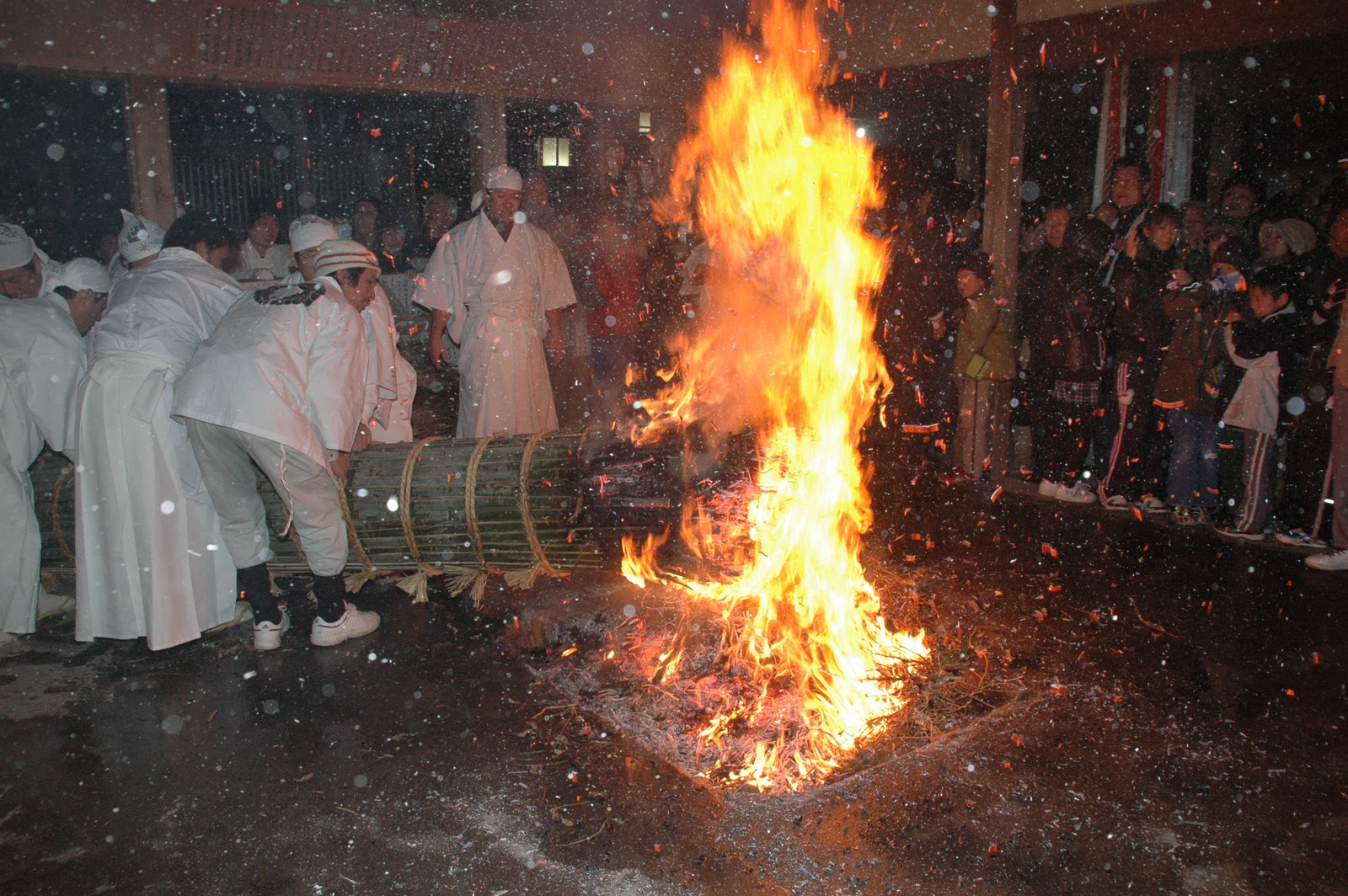
Before coming to Seika, I had the chance to peruse around the internet to see what the town would be like. Although most of the stuff wasn’t surprising, I kept running across pictures of a festival where what looked like a giant flaming log was being carried around. The festival was called “Igomori Matsuri,” and is apparently one of Seika’s more famous happenings. The festival looked like a lot of fun, and has been something I’ve looked forward to since coming to Seika. And on January 18th, I finally got the chance to go.

来町前に、精華町はどういうところかを分かるようによくインターネットで検索しました。多くのことは想像していた通りだったけど、氏子に運ばれている炎の丸太みたいな大松明の祭りの写真を何回も見ました。いごもり祭と言われて、精華町の有名な出来事のようでした。祭りはとても楽しそうだったから、来町から一番期待していること一つでした。そして、1月18日(火)にいよいよ行けました。

The festival is held yearly at Hosono Shrine in Seika, and consists of taking a huge torch made from bamboo trees and bean stalks, and then lighting the thing on fire and carrying it around the city streets. Though they’ve never weighed the torch, people at the festival told me it was about 80 kilos. And though it’s passed off between the parishioners now, apparently in the good ol’ days the torch was carried by only one man at a time. According to legend, the tradition was started to appease the vengeful spirit of Emperor Kaika’s brother Takehani Yasuhiko, who was killed for treason over 2000 years ago.

いごもり祭は毎年精華町の祝園神社で行われます。竹の木と豆の木でできている大松明に火をつけって、白装束の男の氏子に担がれ町内を練り歩きます。大松明を量ったことがないけど、ベテラン参加者によると80キロもあります。さらに、現在は何人かの氏子に交代で担がれているけど、昔は一人で担がれたそうです。伝説によると、2000年前に朝廷に背いた崇神天皇の弟武埴安彦(たけはにやすひこ)はこの辺りに討伐されて、鬼神になりました。武埴安彦の鬼神を鎮めるように、いごもり祭が始まったと言われています。

The festival had yet to start when I got there, but food stalls were set up, and people seemed to be having fun just milling about and talking. I started talking with some local kids, and basically became their buddy for the night. I told them jokes, taught some English and repeatedly explained that no, gorillas, lions, and giraffes don’t roam wild in America.

着いたら祭りはまだ始まっていなかったけど、屋台などが設置されたし、皆さんが楽しそうでぶらぶらしていました。地元の小学校生達と話し始めて、冗談を言ったり、英語を教えたり、アメリカでは野生のゴリラ、ライオン、キリンがいないと説明したり、すぐ仲良くなりました。

Soon the festival got under way, and the men tasked with carrying the torch started a fire inside Hosono shrine. Now, I knew there would some flame and such, but I was not prepared for the fifteen-foot high inferno that burst out, with flames licking the roof of the wooden temple. It seemed unsafe at the time, but somehow I made it back alive. After letting the flames die down, the torch was carried out and started on it’s journey around Seika. The torch is followed by a compartment containing the god of the shrine, and it took them about an hour to complete the course. By the time they finally got back, the torchbearers looked beat, but really happy to have taken part.

そしていごもり祭が始まって、氏子は祝園神社内で火を起こしました。火はちょっと大きいと分かっていたけど、神社の天井に届く高さ4メートルの炎には覚悟できていませんでした。その時はちょっと危なそうでしたけど、ちゃんと生きて帰ってきました。不火になったら、大松明は氏子に担がれ町内を練り歩き出しました。大松明の後に神様が入っている箱が続いて、一時間後戻ってきました。氏子達は本当に疲れたみたいだったけど、参加できてうれしそうでした。

It was nice to see people of all ages at the event. These kinds of festivals are fun, not only because I got to see a huge burning torch this time, but also because you get to meet people from all age brackets and lifestyles. I spoke with everyone from elementary school kids to octogenarians, and learned a lot about the Igomori festival, and Seika’s history. Like town fairs in the States, Japanese festivals are a great place to meet people who, though you all live in the same town, might never run into otherwise. Admittedly though, American fairs usually don’t have giant burning torches, so this was a fun treat to see.

祭りを見れただけではなく、あらゆる年齢の人々と会えたから、いごもり祭が凄く好きになりました。小学校4年生から80歳代の方とも話して、いごもり祭と精華町の歴史について教えてもらいました。もう来年の祭りを楽しみしています。アメリカの祭りと同じで、日本の祭りで同じ所に住んでも普通に会わない人と会えるから面白いです。確かにアメリカの祭りはあまり炎の大松明がないから、いごもり祭を見れてよかったです。

Sunday, January 16, 2011

Coming of age Day in Seika \ 成人の日

Although many countries and cultures have a coming of age tradition, the ways in which each celebrate are very different. Jewish children celebrate Bar Mitzvah and Bat Mitzvah, young Americans have their 21st birthday and all the revelry that goes with that, and in Japan there is Coming of Age Day. On January tenth, Coming of Age Ceremonies were held in every city, town and village in Japan, and people who turned twenty in past year gathered to celebrate the start of their new, adult lives.

成人の文化を持つ国や民族は多いですが、それぞれの文化の祝い方は大きく違います。ユダヤ教徒の子どもがバル・ミツワーとバト・ミツバー(子どもが大人の責任を持てる年齢に達したことを記念して行われる成人式。男の子が13歳になるとバル・ミツワーを、12歳になる女の子はバト・ミツバー)を祝って、アメリカ人は21歳のパーティなどしますが、日本では成人の日があります。今年度二十歳になった若者が各市町村で行われる成人式に集まり、新しい門出を祝いました。


I was lucky enough to get to go to part of Seika’s Coming of Age ceremony, which started with a performance from the Seika Girls and Boys Chorus. There were at least a hundred kids in the chorus, and though I thought that a chorus that big and that young couldn't be too easy on the ears, the kids could really sing, and all the 20 year olds seemed impressed too. Then Mayor Kimura and Seika Town Assembly President Sugiura each gave a speech welcoming the new adults, expressing hope that all those in attendance take the time to thank their parents and everyone else who helped them grow and learn. Group pictures were taken, and all of the participants went upstairs for free food and games, whereupon, not wanting to be the elephant in the room, I gracefully bowed out.
私は運が良くて精華町の成人式に行けることになりました。成人式は少年少女合唱団の歌から始まりました。合唱に百人の子どもぐらいがいて、メンバーは多くて、若者ばかりなので、うまく歌えないと思いましたが、合唱の子どもたちは本当に凄くできて、新成人も感動したようでした。次に、木村町長と精華町議会の杉浦議長がスピーチをし、新成人が両親やお世話になった人にちゃんと感謝を伝えられるように期待を表しました。グループの写真が撮影後、新成人が交流会で軽食を食べたり、ゲームをしたりしましたが、私はその時に帰りました。


One of the most notable elements of Coming of Age Day is the dress that new adult women wear. Although young men normally dress in suits for the ceremony, the young women wear incredibly colorful furisode (a type of kimono with long sleeves), and often spend hours on their hair and make-up. Even if you don’t get to go to the actual ceremony, you’re still very likely to see young women wearing their furisode around town, and it’s always a surprise to walk onto a train and see a gaggle of young women decked out in elaborate gowns and gigantic hair. Although you see women in Kimono and Yukata at festivals and the like, the level of effort put into the Coming of Age Ceremony dresses is staggering, and expensive, with some young women spending thousands of dollars preparing the dress and make up.

成人の日といえば、新成人の女の人が着ている着物です。男の人は普通にスーツを着ますが、女の人は色彩豊かな振袖を着て、さらに髪などに何時間も費やします。成人式に行けなくても、振袖を着ている女の人を街で見る可能性は高く、電車などで振袖の格好をしている女の人達を見ると驚きます。