Thursday, April 21, 2011

3rd International Understanding Festival / 第3回国際理解フェスティバル

  Now in its third year, the International Understanding Festival, sponsored by the Seika town office and Seika Global Network, is a chance for people to come and learn about all the different international events and activities in Seika. It serves both as a review of last year’s activities as well as a preview of what’s to come. And this year’s International Understanding Festival, held on April 17th in the Seika Exchange Hall, was chock full of information.

  精華町と「せいかグローバルネット」が共催し、第3回を迎える国際理解フェスティバルは町内の国際交流行事や活動についてさらに知る良い機会です。このフェスティバルでは去年の活動の一部と、今年度の計画を知ることができます。そして、4月17日(日)に精華町交流ホールで開催された第3回国際理解フェスティバルは情報満載でした。

  Seeing as education is obviously the most important thing out there, the event started off with a presentation by a teacher from Seihoku Elementary on their international activities. Starting this month, English classes have become mandatory for all kids in grades 5 and 6 (ages 10-12). To prepare the kids for this, the folks at Seihoku Elementary have been holding occasional English classes combined with courses on International Understanding to get the kids ready for the switch. Although I have not seen the English courses in action, I was the one teaching the International Understanding course and I can say that most of the kids were really open to learning more about foreign cultures and languages. Japan occasionally catches flak for not having the greatest English abilities or teaching, but the desire to learn is definitely there, so I can only hope that starting the kids off early will help them be more excited about learning English.

  はじめに、最も大切な教育について、精北小学校の先生の国際交流活動の発表から始まりました。今年から、外国語活動が小学校5年から義務教育に導入されるので、生徒達の準備として精北小学校で年に数回英語の授業と国際理解授業を行っています。私は英語の授業を見たことがありませんが、国際交流の授業を教えて、ほとんどの生徒達が外国の文化・言語について興味もっているようでした。日本人の英語力が低いとたまに言われますが、向学心はあるから、子どもの早期英語教育が子どもの英語に対する関心を引き出すと期待します。

  Next up was the Seika West Middle School International club who, with the help of yours truly, presented on Seika’s sister city, Norman, Oklahoma. The kids had worked long and hard on the presentation, and they had even given precious hours of their spring break to help out, so it was good to see it go off well. Although we covered a lot of aspects of Norman’s history and famous things in Norman, we also got to tackle stuff like what Norman kids eat for school lunch. People were more than a little surprised to see tacos, pizza, and sloppy joes on the menu.

  次に、精華西中学校の国際交流部と私は精華町の姉妹都市ノーマン市について発表しました。国際交流部の生徒達は大切な春休みの間でも、本当に一生懸命努力したから、うまくいったのはよかったです。ノーマン市の歴史や名所を説明しましたが、ノーマン市内の小学校給食など面白いことも紹介できました。タコス、ピザ、スロッピジョーなどのメニューはびっくりでしょうか。

  Following this was a speech by a young Miss Cho, a participant in the 9th Foreigner Message Contest. The person originally scheduled couldn’t make it, and Cho was nice and brave enough to step forward and give a speech on short notice. Discussing cultural differences between Japan and China, Cho focused on the differences in public transport, and trains in particular. I did chuckle when she mentioned all the times she had gotten on a train going the wrong way, or overslept and missed her stop, as I have far too many of those same experiences. Most impressive though, is how far her Japanese has come in just a few months. Having met her when she first came to Japan and listening to her speech now, it is mind-blowing how much she has improved. At this rate she’ll pass me up in a few months, so it’s time to take drastic measures, i.e., actually studying again.

  それに続いて、第9回外国人によるメッセージコンテストに出場した張さんはスピーチをしました。もともと予定された方はこられなくなったから、突然でしたが張さんはやさしく勇敢に発表してくれました。交通機関、特に電車を中心に中国と日本の文化の違いについて語りました。電車を間違ったことや寝過ごしたことを説明しながら、私も同じ経験が何回もあるから笑いました。しかし一番印象的なことは、数ヶ月間に日本語の向上です。一屏さんがはじめて来日した頃に会ったから、今の日本語と比べると、どれぐらい上達したかにびっくりしました。この調子ではもうすぐ私をすぐ追い抜くから、私は勉強しないといけないですね。

  After Miss Cho was a speech from a Mrs. Hasegawa, who raised her children in America, and put forth that there were some things that Japanese could learn from the American system. Not having kids of my own on which to judge, I can’t say which country has a better system, but it was nice to see someone so open-minded about such a serious topic as child rearing. It reminds us that both countries still have a lot to teach each other.

  張さんの後に、アメリカで子どもを育てた長谷川さんは、日本人がアメリカの子育て制度から学ぶことがあると発表しました。私には自分の子どもがいないから、どっちの国がいいか判断できませんが、長谷川さんみたいに子育てのような大切な課題についても広い心を持つ人を見るのはよかったです。両国はまだお互いに教えられることがたくさんあるでしょう。

  By now though people were getting restless, and about ready to move onto something besides speeches. Thankfully the folks at Seika Global Net had planned a fun activity. By taking classic Japanese songs like “Sakura” and giving everyone the English lyrics, we had a good old fashioned sing along. Unfortunately, as the sole native English speaker, this meant I also had to lead everyone in song, which is just below flamenco dancing on the list of things I never want to do in front of a crowd. Still though, it was fun, we got to sing in Chinese too, and no one seemed to mind that I sounded like a tone-deaf badger.

  客さんはすわすわして、そろそろスピーチ以外のことをやりたくなったようでした。そして次に、「さくら」などの伝統的な日本の歌の英・中国語の作詞を皆に渡して、皆が一緒に合唱をしました。英語のネイティブスピーカーの一人として、恥かしくて皆の前で歌いましたが、中国語でも歌ったし、だれも私の下手さに気付かなさそうだったし、なかなか楽しかったです。

  The event was capped off with representatives from Seika Global Net explaining all the fun things they do throughout the year, which include hiking tours, Japanese lessons, and even the chance to farm your own vegetables. Hopefully everyone who came learned about the opportunities for international exchange here in Seika and decide to come out for more events during the year!

  最後に、せいかグローバルネットの各部会代表たちはハイキングツアー、日本語教室、農業などの主な活動を紹介しました。来てくれた人たちは町内の国際交流活動について知って、今後のイベントへ行きたくなるといいですね。

Saturday, April 16, 2011

Cherry Blossoms 花見

  There is perhaps no better sign of spring beginning than seeing flowers bloom. Seeing that first flower open lets you know that winter is finally over, and that life is coming back to the world. The advent of spring in Japan however, is less a subtle opening of one or two daffodils, and more a massive explosion of pink that sweeps over the country-side like some kind festively decorated army. Of course I’m talking about Sakura, the famous Japanese Cherry Blossoms, that cover the landscape of Japan from starting from late March to early May.

  咲いている花ほどの春のきざしはないと思います。最初開けた花を見ると、冬が終わって、世界がすぐ生き返るということを知らせます。しかし日本で春の訪れは花一個か二個が開くことよりピンクの爆発できざしされます。もちろんこれは桜の話をしています。

  Long considered an important symbol of Japan, Sakura trees exist in great numbers everywhere from Okinawa to Hokkaido, and their flowering is met with much rejoicing and excitement. When the Sakura trees are in full bloom, many Japanese go out and enjoy hanami, literally, “flower viewing.” Hanami can range from a relaxing stroll under some Sakura trees to a rowdy picnic and party in a park, but whatever the method, the practice is extremely popular in Japan.

長い間大切なシンボルと思われている桜は沖縄から北海道まで多数あるが、開花期は興奮して受け入れられます。そして桜が満開になると、多くの方が花見に行きます。花見はのんびり散歩から騒々しいピックニックとパーティーまでもあるが、どんな方法であれ、日本では大人気な瞬間です。

  Since the weather was so nice this past weekend, a friend and I trekked down to Nara to wander around and do some Hanami. We were clearly far from the only ones with this idea though, as Nara city was jam-packed with people enjoying the Sakura and weather.

  先週末天気は凄く良かったから、友達と一緒に奈良で花見しに行きました。行こうと思っていたのは私らだけじゃなくて、奈良市が桜といい天気を楽しむ人達でにぎわっていました。


  Seika has quite a few Sakura trees as well, and they’ve even bloomed in front of the Town Office.

  精華町に桜が結構多いし、精華町役場前にも咲いていました。

Monday, April 11, 2011

Osaka Powerlfting Tournament
大阪府パワーリフティング大会

  As I wrote a while back I'm into weightlifting, but recently I had been having trouble with motivation, as my training, though enjoyable, didn’t really have a goal. So a while back I competed in the Osaka powerlifting championships. Despite the fact that powerlifting is about as popular in Japan as sumo is in America (not very), there is a devoted community of lifters here in Japan. Although there were not many competitors at the Osaka Powerlifting Championships, the atmosphere was great, and it was cool to meet people into the same stuff.


  前に書いたとおり、私はウエイトトレーニングをしていますが、トレーニングが目標がなかったので、最近動機が少しなくなました。だから4月3日に大阪パワーリフティング大会に出場しました。日本ではあまり人気がないのにも関わらず献身的なリフターの共同体があります。参加者は少なかったですが、いい雰囲気があって、同じ趣味を持っている人と会うのは楽しかったです。

  The tournament was held in a community gym way down in the southern part of Osaka, with about 30 or so people coming out to compete. Powerlifting, for those of you who’ve never heard, is a sport where you test strength across three barbell lifts, and the person who moves the most weight wins. Simple right?

  大阪府の南のほうにある体育館で行われ、約30人が出場しました。パワーリフティングというのは、ウエイトトレーニングの3種目で、バーベルを持ち上げ、その重さを競うスポーツです。簡単でしょう。

  The three lifts are the squat, where you put barbell on your back and squat down, the bench press, where you lie on a bench and press the bar up, and the deadlift, which is just picking up the barbell from the floor. Competitors are split up into weight and age brackets, and though technically a competition, for most people it was more about breaking their own records. Still, it seemed like every other lift was an attempt at a Japanese record, and 40 were actually broken.

  3種目には、バーベルを背中に背負って、そのまましゃがむスクワット、横たわりながらバーベルを胸に下ろして、上に押し挙げるベンチプレス、そしてバーベルをただ床から持ち上げるデッドリフトがあります。選手は体重・年齢で分かれていますが、表向きは勝負ですが、多くの出場者にとって、自分の記録を破る方が大事そうでした。それでも、一つずつの試技が日本記録に挑戦するようで、40の全日本記録が破られましたよ。


  The competitors ranged from 15 to 63, with many in their 40s and 50s. People of all strength levels and experience showed up, and though many competitors were part of school clubs or gyms, there were a lot of other folk competing by themselves. I was clearly on the lower end of both strength and experience, but many of the experiences folk were more than happy to talk and explain things. Competitors would go up to do their lift, get intensely fired up, and have everybody in the gymnasium cheering for them as they pushed themselves to the limit to lift the bar.

  本大会の出場者は15歳から63歳まで、多くの方は40代か50代でした。経験の有無やレベルに関わらず幅広い人が出場して、多くの方が学校のクラブやジムなどの団体として参加したが、個人として競争していた人も結構いました。私は筋力、そして経験において下端でしたが、ベテランたちが優しく手伝ったり、説明してくれたりしました。各選手はステージに上がって、燃え上がって、ジム内の皆に応援されながら自分を極限の追い込み、バーベルを持ち上げました。
 
Also, a young guy apparently ranked third in the world for his weight class showed up, and it was really cool to see someone at such a high level competing. Also, the fact that his legs looked like two beluga whales was kind of terrifying. I felt about as weak as possible when he, at about 160 lbs, deadlifted 570 lbs and squatted 500 without too much strain, but I guess that’s just how world class guys are.

  そして世界三位の若い男性も出場したから、そういう世界レベルの選手を見るのはとても面白かったです。彼が体重74キロで、260キロを持ち上げて、230キロをスクワットしたので、あぜんとしました。さすが世界レベル。

  Sadly I didn't win anything, as the only other guy in my division broke every single Japanese record for our weight and age group, but it was still good to participate and see where I stand in comparison to other lifters. Seeing where I lagged behind, as well as what my strengths are, has lit a fire under my bum. So I'm back in the gym, working on what I need to, and aiming to do much better next time round.
  私の年齢・体重別階級に入っていた人が日本記録全部破りまして、残念ながら私は勝てませんでしたが、参加して、他のリフターたちと比較して、自分の立場を分かるのは良かったです。自分の弱点、そして長所を分かってきたから、やる気が出ました。だからジムに戻って、弱点を強め、今度の大会にもっと力を発揮できるように頑張っています。

Friday, March 25, 2011

Kyoto Antique Fair / 京都大骨董市


  Kyoto is a place with history out the wazoo, so it makes sense that antique sales held in Kyoto tend to be pretty awesome. And so, a while back I stopped by the Kyoto Antique Fair, a huge gathering of antique vendors from the Kyoto area. Though I still prefer flea markets for value, there is no arguing that in terms of quality, this was one of the most impressive sales I've ever been to.
  京都府は歴史が多い所ですから、京都府で開催されるアンティークセールが凄いのはあたりまえです。私は少し前に京都アンティークフェア(京都大骨董市)に行きました。安いといえばフリーマーケットのほうがいいと思いますが、品質に関して、京都アンティックフェアは私が行ったマーケットの中で最も素晴らしかったです。

 
  While most antique markets in Kyoto are held outside, this event was held in a huge hall, and there was barely enough room to move at some points it was so packed. From coins to kimonos to swords and spears, and a surprising amount of Elvis paraphernalia, there was pretty much everything under the sun.
  京都府の骨董市はほとんどが外で開催されます。このイベントはとても広い展示場で行われましたが、身動きがとれないほど混み合っていました。小銭、着物、刀、槍やエルビスグッズなど、ありとあらゆるものがありました。


  With 300 stalls all packed indoors, it was a little overwhelming, made more so by the realization that this is held three times a year. Looking at some of the stuff, you have to wonder how people went about gathering all of these things . Especially seeing extremely retro American goods, you have to wonder what kind of journey the goods took.
  300店もの出店が並び、本当に賑やかでしたが、このフェアを1年間に3回開催するのはすごいと思います。商品を見ると、店を出している人はどうやってをこんな物を集めかを思わせられます。特に古いアメリカのグッズは、どんな旅をしたかを考えさせられざるを得ません。


  Despite not being able to afford most of the stuff, I did add to my Daruma collection, so I consider the day a rousing success. The next antique fair is planned for mid -June, so anyone who wants to should definitely check it out.
  ほとんどのものは私にとって高すぎでしたが、だるまを購入したことにより、私のだるま人形コレクションに一個追加できたので、成功と見なします。次回のフェアは6月の予定ですから、興味があったら是非見に行ってください!


You can find out more info by checking the link below
くわしくは以下のリンクへ

http://www.kottouichi.jp/kyoto.htm

Tuesday, March 15, 2011

International Exchange Program 2011 ・ 国際交流プログラム2011

It’s been quite a while since the last post, and quite a lot has happened, namely the huge earthquake that shook Japan last Friday. For anyone who has seen the pictures, the level of damage is sobering, and I can’t recommend enough that people do what they can to help. Many organizations such as Doctor’s Without Borders, Save the Children, and the Red Cross among others are planning to provide aide, and donations of any size can always do something.

長らく投稿しませんでしたが、その間いろいろなことがありました。特に大きかったのは先週の金曜日、日本に衝撃を与えた東北地方太平洋沖地震です。ニュースを見た方はご存じと思いますが、損害の程度は本当にハッとするほどひどいです。赤十字社、国境なき医師団、セーブ・ザ・チルドレンなどの団体が援助する予定で、寄付はいつも役立ちます。


The Kansai region was less affected, so here in Seika we were able to go ahead with the International Exchange Program, where everybody seemed happy to cook some good food, have a laugh and try to think about something else than the devastation for a little while.
関西地方は地震に影響が少なかったので、私達は3月13日(日)に「国際交流プログラム2011」を予定通り開催しました。参加者は料理を作ったり、笑ったり、地震以外のことについて考えられたから、皆は凄く楽しそうでした。

The International Exchange Program is held every year, and promotes exchange through the best way The theme of the event was, “My Favorite Day,” where participants talked about some of their favorite memories, or what would qualify as a great day for them.

国際交流プログラムは毎年開催される、料理やゲーム、歌などを通じて国際交流を推進するイベントです。今回のテーマは「私の一番楽しい日」、参加者は楽しい思い出や理想的な日を話し合いました。


There were also presentations from two recipients of the Seika study abroad grant, a young girl who went to high school in the states, and a retired man who went to France to study the art of stained glass. I laughed a few times as the girl described the things that shocked her about American life, like giant birthday cakes and how many presents people get at Christmas. The man who studied stained glass actually brought in some of his work, which was awesome to see. Despite speaking very little French, the man said he had a great time, and it was quite inspiring to see how anyone with a desire to learn something new can achieve it.

そして、「精華町海外体験補助金」を受給し、米国の高校で留学した女性一人とフランスでステンドグラスの作り方を学んだ男性の体験について聞きました。大きい誕生日ケーキやクリスマスにプレゼント何個ももらうことなど、アメリカの生活に驚いたことを説明した女女性の話が笑わせました。そして、ステンドグラスを学んだ男の人は作品を持ってきて、本当に素晴らしかったです。彼によると、フランス語を上手にしゃべれなくても、すごく楽しそうでした。
However, the real exciting part, at least for me, was the cooking. A few of the foreign participants were asked to teach how to make traditional meals from their home country. I too was asked, and as my cooking is about as bad as my ballet, I hesitated at first about what to teach. Eventually I decided on the good old American classic, rice krispie squares. They’re pretty hard to mess up, kids love them, and the ingredients are all easily found in Japan. Other people made slightly fancier food, like Chirashi-zushi, Chicken kebabs with peanut butter sauce, and the truly awesome deep fried bananas. Although I may have lost out in presentation, the kids at the event devoured the rice krispie treats, so I consider it a rousing success.

私にとって一番楽しかった部分は料理でした。参加外国人の何人かが皆と作れる母国の料理を教えるようにお願いされました。私もお願いされて、あまり料理を教えるのは得意ではないから、ちょっと迷いました。結局アメリカの典型的なお菓子「ライス・クリスピー・トリート」に決めました。失敗しにくいし、子供達が大好きだし、材料も日本で見つけられるからいいおやつです。ほかの参加者はもっと立派な料理、例えちらし寿司、ピーナツソース付けの焼き鳥、揚げバナナを作りました。立派さということに負けたかもしれませんが、子供たちがライス・クリスピー・トリートを全てガツガツ食べたから、よく成功したと思います。

After eating, everyone gathered again to try signing “Doremi,” the famous song from sound of music, in a few different languages. Of course we gave the English version a shot, but there were also Chinese, Romanian, and Japanese versions that were a lot of fun to learn and sing. Not content with just singing in a foreign language, we also gave the song a try on hand bells, and though I don’t think we’ll be giving concerts anytime soon, it was still fun to try and make some music.
食べ終わったら、皆が集まって、「サウンド・オブ・ミュージック」からの「ドレミの歌」を4つの言語で歌いました。もちろん英語のバージョンを歌ってみたけど、中国語、ルーマニア語、日本語のも習って歌いました。そして、ハンドベルもやってみて、本当に楽しかったです。

It’s been a very rough and stressful week for everyone in Japan, so it was nice to see people relax, meet new people, try new foods, and just have fun.
日本中が大変な事態の中、参加者がリラックスしたり、友達を作ったり、新しい料理を試みたり、楽しんだりできたひとときとなりました。

Wednesday, January 26, 2011

いごもり祭 / The Igomori Festival

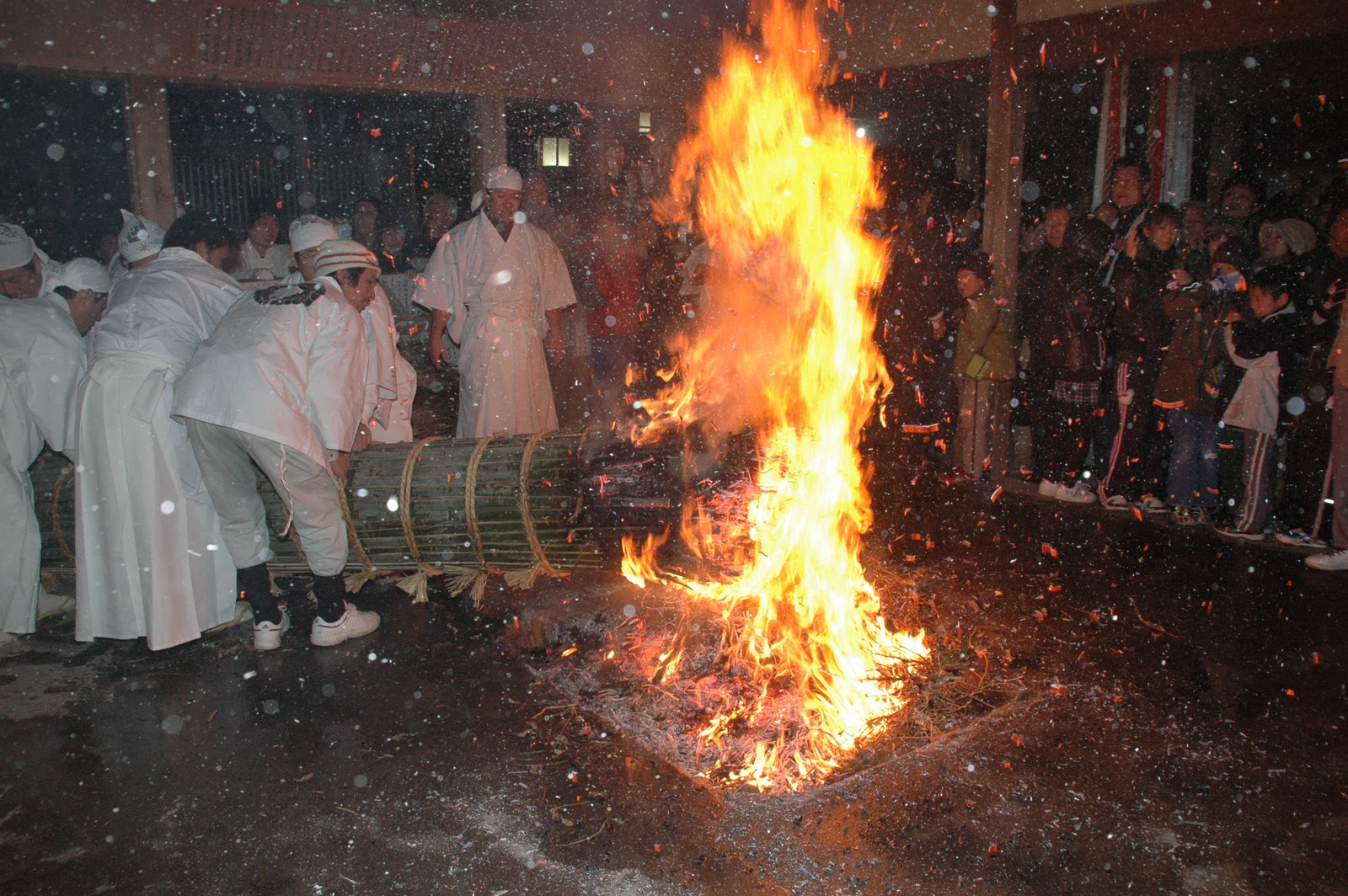
Before coming to Seika, I had the chance to peruse around the internet to see what the town would be like. Although most of the stuff wasn’t surprising, I kept running across pictures of a festival where what looked like a giant flaming log was being carried around. The festival was called “Igomori Matsuri,” and is apparently one of Seika’s more famous happenings. The festival looked like a lot of fun, and has been something I’ve looked forward to since coming to Seika. And on January 18th, I finally got the chance to go.

来町前に、精華町はどういうところかを分かるようによくインターネットで検索しました。多くのことは想像していた通りだったけど、氏子に運ばれている炎の丸太みたいな大松明の祭りの写真を何回も見ました。いごもり祭と言われて、精華町の有名な出来事のようでした。祭りはとても楽しそうだったから、来町から一番期待していること一つでした。そして、1月18日(火)にいよいよ行けました。

The festival is held yearly at Hosono Shrine in Seika, and consists of taking a huge torch made from bamboo trees and bean stalks, and then lighting the thing on fire and carrying it around the city streets. Though they’ve never weighed the torch, people at the festival told me it was about 80 kilos. And though it’s passed off between the parishioners now, apparently in the good ol’ days the torch was carried by only one man at a time. According to legend, the tradition was started to appease the vengeful spirit of Emperor Kaika’s brother Takehani Yasuhiko, who was killed for treason over 2000 years ago.

いごもり祭は毎年精華町の祝園神社で行われます。竹の木と豆の木でできている大松明に火をつけって、白装束の男の氏子に担がれ町内を練り歩きます。大松明を量ったことがないけど、ベテラン参加者によると80キロもあります。さらに、現在は何人かの氏子に交代で担がれているけど、昔は一人で担がれたそうです。伝説によると、2000年前に朝廷に背いた崇神天皇の弟武埴安彦(たけはにやすひこ)はこの辺りに討伐されて、鬼神になりました。武埴安彦の鬼神を鎮めるように、いごもり祭が始まったと言われています。

The festival had yet to start when I got there, but food stalls were set up, and people seemed to be having fun just milling about and talking. I started talking with some local kids, and basically became their buddy for the night. I told them jokes, taught some English and repeatedly explained that no, gorillas, lions, and giraffes don’t roam wild in America.

着いたら祭りはまだ始まっていなかったけど、屋台などが設置されたし、皆さんが楽しそうでぶらぶらしていました。地元の小学校生達と話し始めて、冗談を言ったり、英語を教えたり、アメリカでは野生のゴリラ、ライオン、キリンがいないと説明したり、すぐ仲良くなりました。

Soon the festival got under way, and the men tasked with carrying the torch started a fire inside Hosono shrine. Now, I knew there would some flame and such, but I was not prepared for the fifteen-foot high inferno that burst out, with flames licking the roof of the wooden temple. It seemed unsafe at the time, but somehow I made it back alive. After letting the flames die down, the torch was carried out and started on it’s journey around Seika. The torch is followed by a compartment containing the god of the shrine, and it took them about an hour to complete the course. By the time they finally got back, the torchbearers looked beat, but really happy to have taken part.

そしていごもり祭が始まって、氏子は祝園神社内で火を起こしました。火はちょっと大きいと分かっていたけど、神社の天井に届く高さ4メートルの炎には覚悟できていませんでした。その時はちょっと危なそうでしたけど、ちゃんと生きて帰ってきました。不火になったら、大松明は氏子に担がれ町内を練り歩き出しました。大松明の後に神様が入っている箱が続いて、一時間後戻ってきました。氏子達は本当に疲れたみたいだったけど、参加できてうれしそうでした。

It was nice to see people of all ages at the event. These kinds of festivals are fun, not only because I got to see a huge burning torch this time, but also because you get to meet people from all age brackets and lifestyles. I spoke with everyone from elementary school kids to octogenarians, and learned a lot about the Igomori festival, and Seika’s history. Like town fairs in the States, Japanese festivals are a great place to meet people who, though you all live in the same town, might never run into otherwise. Admittedly though, American fairs usually don’t have giant burning torches, so this was a fun treat to see.

祭りを見れただけではなく、あらゆる年齢の人々と会えたから、いごもり祭が凄く好きになりました。小学校4年生から80歳代の方とも話して、いごもり祭と精華町の歴史について教えてもらいました。もう来年の祭りを楽しみしています。アメリカの祭りと同じで、日本の祭りで同じ所に住んでも普通に会わない人と会えるから面白いです。確かにアメリカの祭りはあまり炎の大松明がないから、いごもり祭を見れてよかったです。

Sunday, January 16, 2011

Coming of age Day in Seika \ 成人の日

Although many countries and cultures have a coming of age tradition, the ways in which each celebrate are very different. Jewish children celebrate Bar Mitzvah and Bat Mitzvah, young Americans have their 21st birthday and all the revelry that goes with that, and in Japan there is Coming of Age Day. On January tenth, Coming of Age Ceremonies were held in every city, town and village in Japan, and people who turned twenty in past year gathered to celebrate the start of their new, adult lives.

成人の文化を持つ国や民族は多いですが、それぞれの文化の祝い方は大きく違います。ユダヤ教徒の子どもがバル・ミツワーとバト・ミツバー(子どもが大人の責任を持てる年齢に達したことを記念して行われる成人式。男の子が13歳になるとバル・ミツワーを、12歳になる女の子はバト・ミツバー)を祝って、アメリカ人は21歳のパーティなどしますが、日本では成人の日があります。今年度二十歳になった若者が各市町村で行われる成人式に集まり、新しい門出を祝いました。


I was lucky enough to get to go to part of Seika’s Coming of Age ceremony, which started with a performance from the Seika Girls and Boys Chorus. There were at least a hundred kids in the chorus, and though I thought that a chorus that big and that young couldn't be too easy on the ears, the kids could really sing, and all the 20 year olds seemed impressed too. Then Mayor Kimura and Seika Town Assembly President Sugiura each gave a speech welcoming the new adults, expressing hope that all those in attendance take the time to thank their parents and everyone else who helped them grow and learn. Group pictures were taken, and all of the participants went upstairs for free food and games, whereupon, not wanting to be the elephant in the room, I gracefully bowed out.
私は運が良くて精華町の成人式に行けることになりました。成人式は少年少女合唱団の歌から始まりました。合唱に百人の子どもぐらいがいて、メンバーは多くて、若者ばかりなので、うまく歌えないと思いましたが、合唱の子どもたちは本当に凄くできて、新成人も感動したようでした。次に、木村町長と精華町議会の杉浦議長がスピーチをし、新成人が両親やお世話になった人にちゃんと感謝を伝えられるように期待を表しました。グループの写真が撮影後、新成人が交流会で軽食を食べたり、ゲームをしたりしましたが、私はその時に帰りました。


One of the most notable elements of Coming of Age Day is the dress that new adult women wear. Although young men normally dress in suits for the ceremony, the young women wear incredibly colorful furisode (a type of kimono with long sleeves), and often spend hours on their hair and make-up. Even if you don’t get to go to the actual ceremony, you’re still very likely to see young women wearing their furisode around town, and it’s always a surprise to walk onto a train and see a gaggle of young women decked out in elaborate gowns and gigantic hair. Although you see women in Kimono and Yukata at festivals and the like, the level of effort put into the Coming of Age Ceremony dresses is staggering, and expensive, with some young women spending thousands of dollars preparing the dress and make up.

成人の日といえば、新成人の女の人が着ている着物です。男の人は普通にスーツを着ますが、女の人は色彩豊かな振袖を着て、さらに髪などに何時間も費やします。成人式に行けなくても、振袖を着ている女の人を街で見る可能性は高く、電車などで振袖の格好をしている女の人達を見ると驚きます。